


For most professional woodworking, aluminum oxide is the better all-purpose abrasive for sanding bare wood, while silicon carbide is the better choice when a fine, consistent finish matters more than abrasive life.
Aluminum oxide is tough and durable. It holds up well during stock removal, dimensioning, edge sanding, and general surface prep.
Silicon carbide is harder, sharper, and more friable. Its grains fracture faster, which helps maintain sharp cutting edges but also shortens abrasive life under heavier pressure.
For many cabinet and millwork shops, the best answer is not choosing one grain for every step. It is using aluminum oxide for the bulk of the work and silicon carbide where its finer cutting action provides an advantage.
Quick Skim: Silicon Carbide vs Aluminum Oxide
| Decision Factor | Aluminum Oxide | Silicon Carbide |
|---|---|---|
| Best overall use | General wood sanding | Fine finishing and finish sanding |
| Bare wood sanding | Excellent | Best for selected final sanding applications |
| Stock removal | Better choice | Usually not the first choice |
| Abrasive life | Longer | Shorter under heavy pressure |
| Cutting action | Durable, consistent | Very sharp, fast cutting |
| Pressure | Handles moderate pressure well | Performs best with lighter pressure |
| Final finish | Good | Excellent |
| Between finish coats | Good with the right product | Excellent |
| Wet sanding | Product dependent | Common, but backing must be wet-rated |
| Hard materials | Versatile | Excellent on glass, plastics, solid surface, and other hard materials |
| Typical shop strategy | Early and middle sanding stages | Final sanding and finishing stages |
The Short Answer: Match the Abrasive to the Sanding Stage
If you are sanding raw lumber, cabinet parts, face frames, doors, or millwork through the main grit sequence, start with aluminum oxide.
If you are making a final pass on whitewood, scuffing sealer, sanding lacquer, leveling a finish, or preparing for a high-quality topcoat, silicon carbide may give you a cleaner result.
This difference comes from more than hardness. Toughness and friability matter just as much.
Aluminum oxide grains break down more slowly, which gives them longer working life. Silicon carbide grains fracture more readily and expose fresh sharp edges. That makes silicon carbide effective when you want a fine cut with less sanding pressure.
Why Aluminum Oxide Is the Woodworking Workhorse
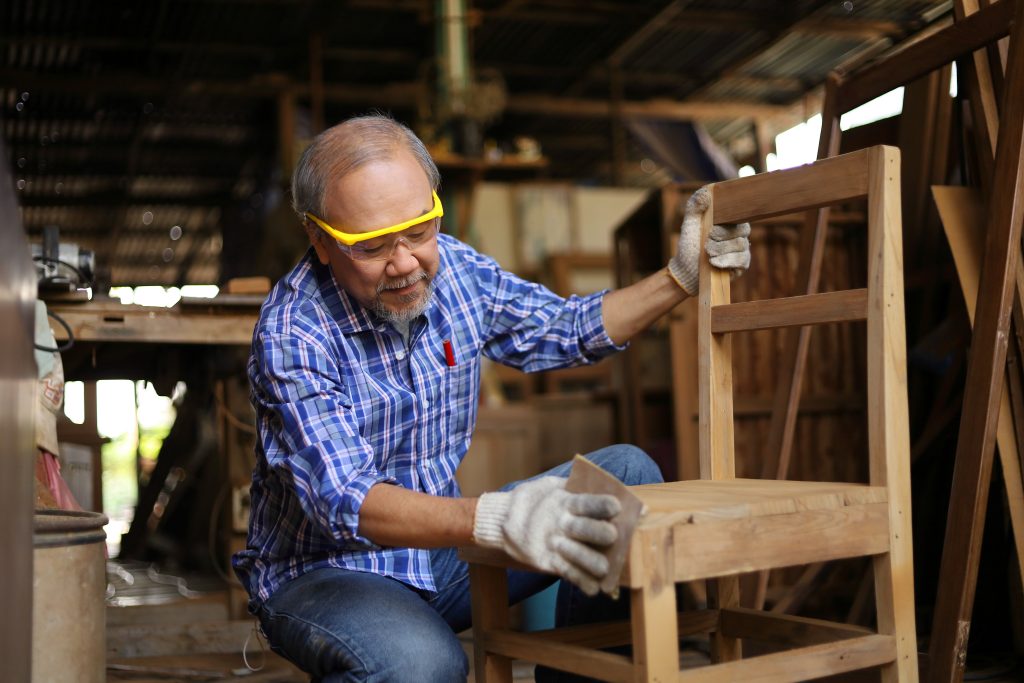
Aluminum oxide remains one of the most widely used abrasive minerals because it balances cutting speed, durability, versatility, and cost.
It works well on both hardwoods and softwoods and is available in products designed for portable belt sanders, random orbital sanders, drum sanders, and wide belt machines. Würth Louis & Company, for example, currently offers aluminum oxide abrasive belts in several backing weights and aluminum oxide discs on paper, film, foam, and mesh-style backings.
Choose Aluminum Oxide For:
- Removing mill marks
- Leveling solid wood parts
- Sanding hardwood and softwood
- Sanding cabinet doors and face frames
- Drum sanding
- Wide belt sanding
- Edge sanding
- General paint and coating preparation
- Longer production runs where abrasive life matters
The grain’s durability is especially valuable in a production shop. Fewer abrasive changes can reduce downtime and abrasive consumption.
Aluminum Oxide is Not All the Same
The term “aluminum oxide” describes the mineral, not the complete performance of the abrasive product.
Different aluminum oxide formulations can vary in friability and cutting behavior. Brown aluminum oxide generally breaks down more slowly, while some white and pink aluminum oxide grains fracture more readily and can produce a finer finish.
Heat treatment, backing, bond, coat density, and anti-loading treatments can also change how an aluminum oxide abrasive performs.
That is why professional buyers should compare the complete abrasive specification instead of choosing by mineral and grit alone.
Where Silicon Carbide Has the Advantage
Silicon carbide is harder and sharper than conventional aluminum oxide, but it is also more brittle. It fractures more easily as it works.
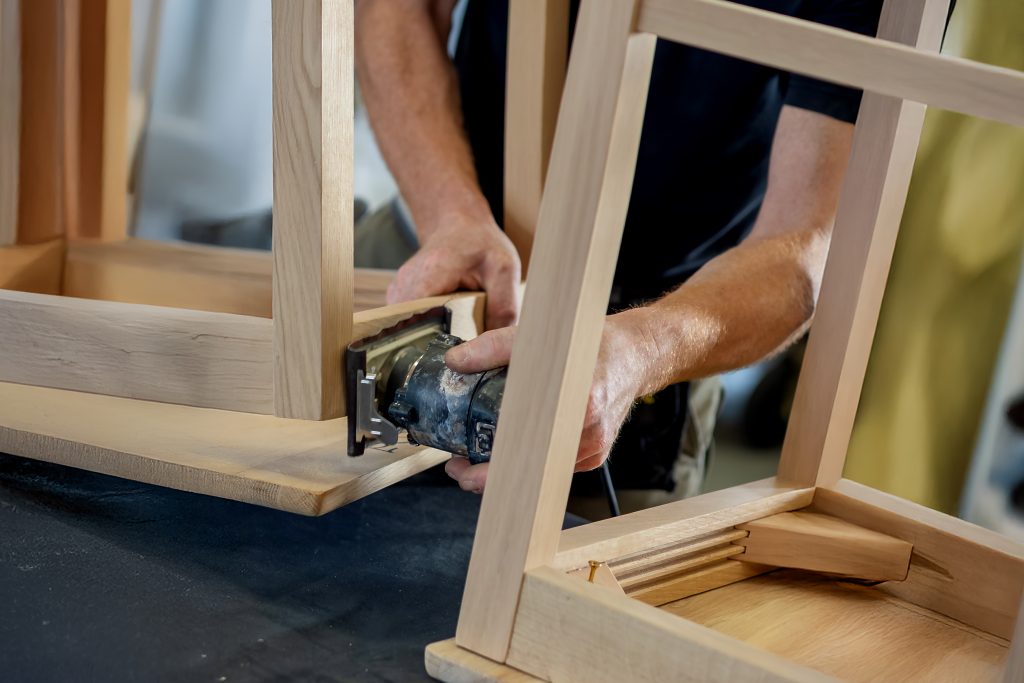
That combination makes it especially useful for low-pressure finishing applications. Silicon carbide is a sharp mineral commonly used for final finishing, including whitewood sanding. Its faster breakdown can produce an excellent finish even though abrasive life is generally shorter than aluminum oxide.
Choose Silicon Carbide For:
- Final whitewood sanding
- Sealer sanding
- Sanding between finish coats
- Lacquer sanding
- Paint preparation
- Fine contour sanding
- Solid surface materials
- Plastics and fiberglass
- Glass and ceramics
- Selected wet sanding applications
Würth Louis & Company currently carries silicon carbide sheets specifically designed for applications such as whitewood sanding, sealer sanding, lacquer sanding, contour work, and fine surface preparation.
This is an important distinction for professional woodworkers. Saying that silicon carbide is simply “bad for wood” is too broad. It may not provide the life you want for aggressive sanding of bare wood, but purpose-built silicon carbide abrasives can perform very well during the final stages of a woodworking finishing schedule.
Which Abrasive Produces the Better Finish?
If surface quality is the main priority, silicon carbide often has the advantage.
Its narrow, sharp grains cut rather than relying as heavily on sustained pressure. As the mineral fractures, it exposes fresh edges. Manufacturers use this characteristic in products made for fine finishing, whitewood sanding, sealer sanding, and similar applications.
Aluminum oxide still produces excellent woodworking results. Its main advantage is that it combines a good finish with greater durability.
A production shop may therefore accept a slightly different scratch pattern in exchange for longer belt or disc life during earlier sanding operations, then switch abrasives for the final pass.
Pressure Changes the Comparison
More pressure does not always mean faster sanding.
Aluminum oxide’s tougher grain structure makes it better suited to applications where the abrasive experiences greater sanding pressure.
Silicon carbide is more brittle. It performs especially well in lighter-pressure applications where its sharp edges can do the cutting. Excess pressure can accelerate grain breakdown and reduce useful abrasive life.
For operators, the practical rule is simple:
Let silicon carbide’s sharp grain cut. Do not try to make it behave like a heavy stock-removal abrasive.
This is one reason it works so well during finish sanding.
Loading Can Matter More Than Grain Type
Wood dust, resin, finish residue, and sanding swarf can fill the spaces between abrasive grains. Once the abrasive loads, cutting efficiency falls and heat can increase.
This is where coat density becomes important.
An open-coat abrasive leaves more space between grains so sanding debris has room to escape. A closed-coat abrasive places more cutting points on the surface and can provide efficient cutting and a fine finish where loading is less of a concern. Norton notes that open-coat construction is commonly used where swarf would otherwise clog the abrasive.
Anti-loading coatings can further improve performance.
Würth Louis & Company carries both aluminum oxide and silicon carbide woodworking abrasives with open-coat or load-resistant designs. This shows why grain type alone cannot tell you which abrasive will last longer in a specific application.
A well-designed silicon carbide sheet may outperform a poorly matched aluminum oxide product when loading is the real problem.
Do You Need Silicon Carbide for Wet Sanding?
Silicon carbide is commonly associated with wet sanding, but there is an important detail professionals should not overlook:
The abrasive mineral does not determine whether the entire product is safe for wet use.
The backing and bond must also be designed for wet sanding.
Some silicon carbide products use waterproof paper or polyester cloth specifically so they can operate wet or dry. Other silicon carbide abrasives use lightweight paper intended for dry finishing.
Always check the abrasive specification before introducing water or another sanding lubricant.
For woodworking, wet sanding is most relevant to selected finishing and polishing operations rather than routine bare-wood sanding.
Backing Makes a Bigger Difference Than Many Buyers Expect
Two abrasives with the same mineral and grit can behave differently because of their backing.
Paper Backing
Paper gives a flat, consistent sanding surface. Lighter paper weights can conform to contours, while heavier paper supports wider sanding operations.
Cloth Backing
Cloth offers greater strength and tear resistance. It is commonly used for sanding belts and demanding machine applications.
Film Backing
Film provides a very uniform surface and good tear resistance. It is often selected when consistent scratch patterns matter.
Foam Backing
Foam-backed abrasives conform to shapes and contours and can help reduce the risk of cutting through edges during fine sanding.
Professional abrasive selection should therefore consider:
Grain + Grit + Coat + Backing + Bond + Sanding Method
The grain is only one part of the system.
Can You Use Aluminum Oxide and Silicon Carbide on the Same Job?
Yes. In many shops, that is the most effective approach.
A typical workflow might look like this:
- Start with aluminum oxide for stock removal. Use the required coarse grit to remove defects, mill marks, or excess material.
- Continue with aluminum oxide through the main sanding sequence. Its durability makes it efficient for most bare-wood work.
- Evaluate the final whitewood pass. Continue with aluminum oxide when abrasive life and throughput are the priority, or consider silicon carbide when surface quality is more important.
- Switch to silicon carbide for selected finishing operations. It is well suited to sealer sanding, lacquer sanding, scuff sanding, and fine finish preparation.
Always match the final grit sequence to the wood species, stain system, finish manufacturer requirements, and desired appearance.
Do Not Judge an Abrasive by the Grit Number Alone
A 180-grit aluminum oxide product and a 180-grit silicon carbide product will not necessarily feel or cut exactly the same.
The mineral shape, backing, coat density, abrasive distribution, bond, sanding pressure, machine action, and product construction all affect the scratch pattern.
Grit standards also describe controlled particle-size ranges rather than guaranteeing that every abrasive particle is identical. FEPA uses the P designation for coated abrasive grit standards.
For production finishing, evaluate the actual scratch pattern on the workpiece, not just the number printed on the box.
A test panel can prevent expensive finishing problems later in the process.
Silicon Carbide vs Aluminum Oxide by Shop Application
| Shop Application | Better Starting Choice | Why |
| Heavy bare-wood sanding | Aluminum oxide | Better durability |
| Wide belt stock removal | Aluminum oxide | Long life under production use |
| Drum sanding | Aluminum oxide | Good balance of cut and life |
| Random orbital sanding on bare wood | Aluminum oxide | Versatile and economical |
| Final whitewood sanding | Depends | AO favors life, SiC favors finish |
| Sealer sanding | Silicon carbide | Sharp, fine cutting action |
| Between finish coats | Silicon carbide | Well suited to light finishing cuts |
| Lacquer sanding | Silicon carbide | Excellent finish characteristics |
| Contour finishing | Silicon carbide with flexible backing | Sharp grain plus conformability |
| Wet sanding | Wet-rated silicon carbide product | Fine cutting action and available waterproof constructions |
Which Abrasive Should Your Shop Buy?
Choose aluminum oxide when your main goals are versatility, abrasive life, production efficiency, and general woodworking performance.
Choose silicon carbide when your main goals are a fine scratch pattern, finish preparation, sealer or lacquer sanding, or light-pressure sanding on hard surfaces.
For many professional woodworking shops, stocking both gives the best result.
Use aluminum oxide as the workhorse. Use silicon carbide as the finishing specialist.
Würth Louis & Company offers abrasive belts, discs, sheets, rolls, and other sanding products for professional woodworking applications, giving shops the ability to match mineral, grit, backing, coat, and format to each step of production.
Final Takeaway: Silicon Carbide vs Aluminum Oxide Sandpaper
The main difference between silicon carbide and aluminum oxide is not simply which abrasive is harder.
Aluminum oxide gives professional woodworkers greater durability for general sanding. Silicon carbide gives them a sharper, more friable grain that excels in fine finishing.
Start with the material and sanding stage. Then compare grit, backing, coat density, loading resistance, and whether the product is designed for wet or dry use.
That approach will usually save more time and produce better results than choosing an abrasive by grain type alone.