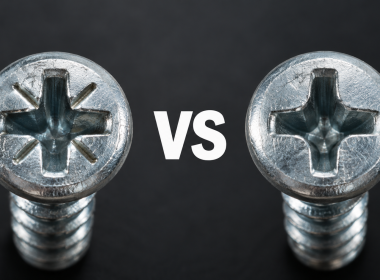


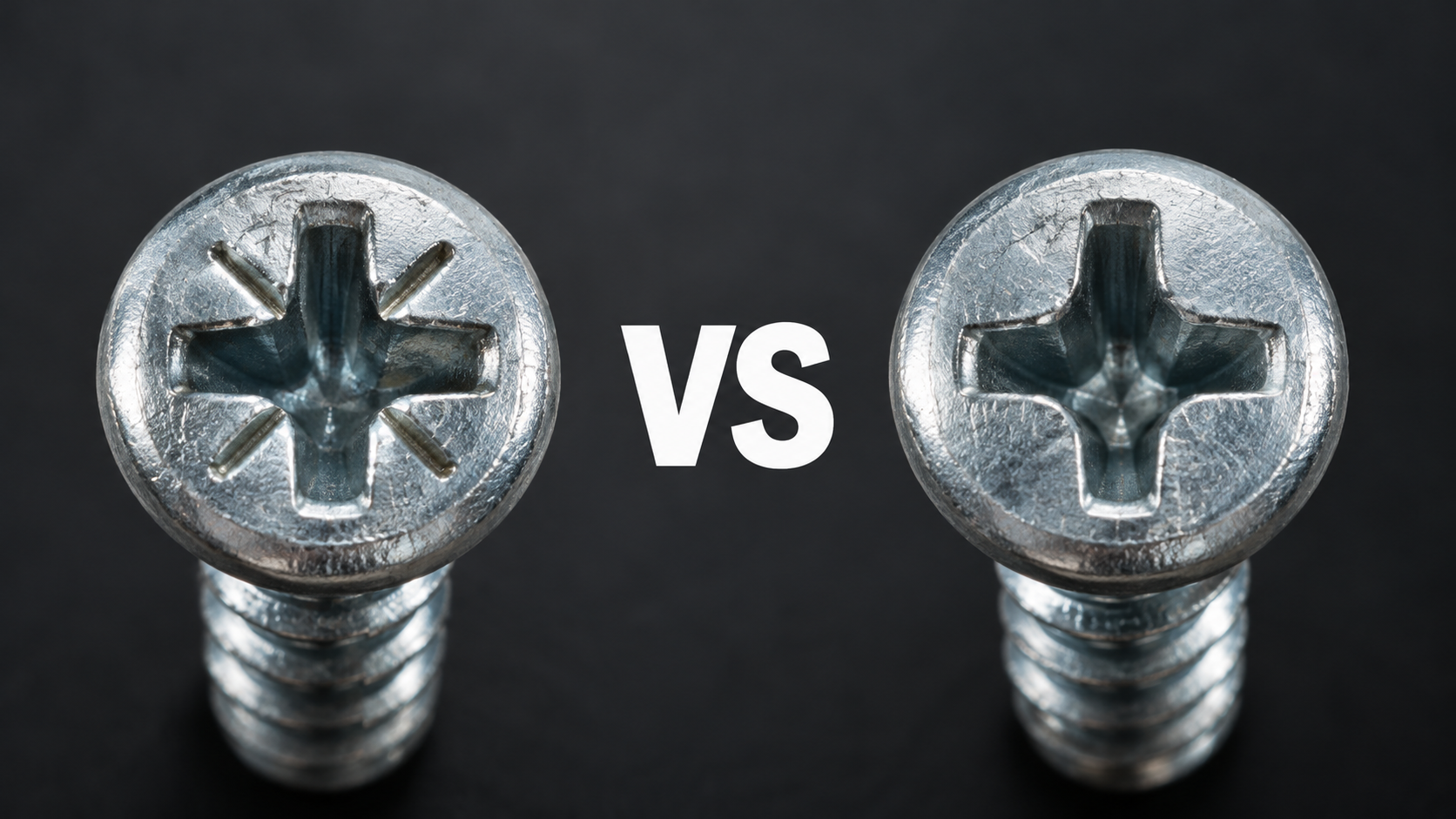
Pozidriv and Phillips screws look similar, but they are not interchangeable. Phillips (PH) screws have a simple cross-shaped recess, while Pozidriv (PZ) screws have a second set of smaller grooves that improve grip and reduce slipping under torque.
For cabinet shops, millwork professionals, and installers, choosing the correct drive matters. A mismatched bit can strip screw heads, damage hardware, and slow down assembly.
Pozidriv is often the better choice for applications that use Pozidriv hardware, such as European hinge adjustments and certain cabinet assembly screws. Phillips remains common for standard hinge, drawer slide, and general-purpose fastening.
The key is simple: Match PH bits to Phillips screws and PZ bits to Pozidriv screws. The correct drive type and size help protect your hardware and deliver consistent results.
Quick Skim: Pozidriv vs Phillips
| Feature | Phillips (PH) | Pozidriv (PZ) |
|---|---|---|
| Screw head design | One cross-shaped recess | Main cross with four smaller grooves at 45° |
| Visual identification | Simple cross, usually no extra lines | Four small tick marks between the main slots |
| Driver tip | Tapered driving flanks | More parallel-sided driving flanks with added ribs |
| Torque transfer | More prone to cam-out under load | Better torque transfer with less cam-out |
| Bit markings | PH1, PH2, PH3 | PZ1, PZ2, PZ3 |
| Common uses | General wood screws, hinges, drawer slides, drywall | European cabinet hardware, hinge adjustments, Euro screws, some confirmat screws |
| Interchangeable? | Use with PH screws only | Use with PZ screws only |
| Best choice | When the fastener specifies Phillips | When the fastener specifies Pozidriv |
Bottom line: Pozidriv provides better resistance to cam-out, but the correct screw and driver combination matters more than the drive’s theoretical torque advantage.
What Is the Difference Between Pozidriv and Phillips?
The main difference is how each screwdriver tip engages the screw head.
Both designs self-center in the recess, but they use different driving surfaces. That changes how they transfer torque and how easily the driver can slip out.
Phillips: A Tapered Cross-Head Design
Phillips screws feature a four-arm cross with angled, tapered driving surfaces. The design helps guide the screwdriver into the recess.
As torque increases, the angled surfaces can push the driver upward and out of the screw. This is called cam-out.
Phillips screws are still widely used because they are familiar, readily available, and effective for many general fastening tasks.
They work well for cabinet and drawer hardware when paired with the correct Phillips bit and installation settings.
Pozidriv: More Contact for Better Grip
Pozidriv, short for positive drive, builds on the Phillips cross-head design.
It features four additional ribs on the screwdriver tip that engage matching grooves in the screw head. The primary driving surfaces are also shaped to reduce the forces that push the tool out of the recess.
These features provide better engagement and reduce the risk of cam-out during tightening or loosening.
For cabinet shops, this can mean fewer damaged screw heads and more consistent fastening during repeated assembly work.
The difference is not just cosmetic. Phillips and Pozidriv have distinct standardized tip profiles.
How to Tell Pozidriv and Phillips Screws Apart
You can often identify the correct drive with a quick look at the screw head and driver tip.
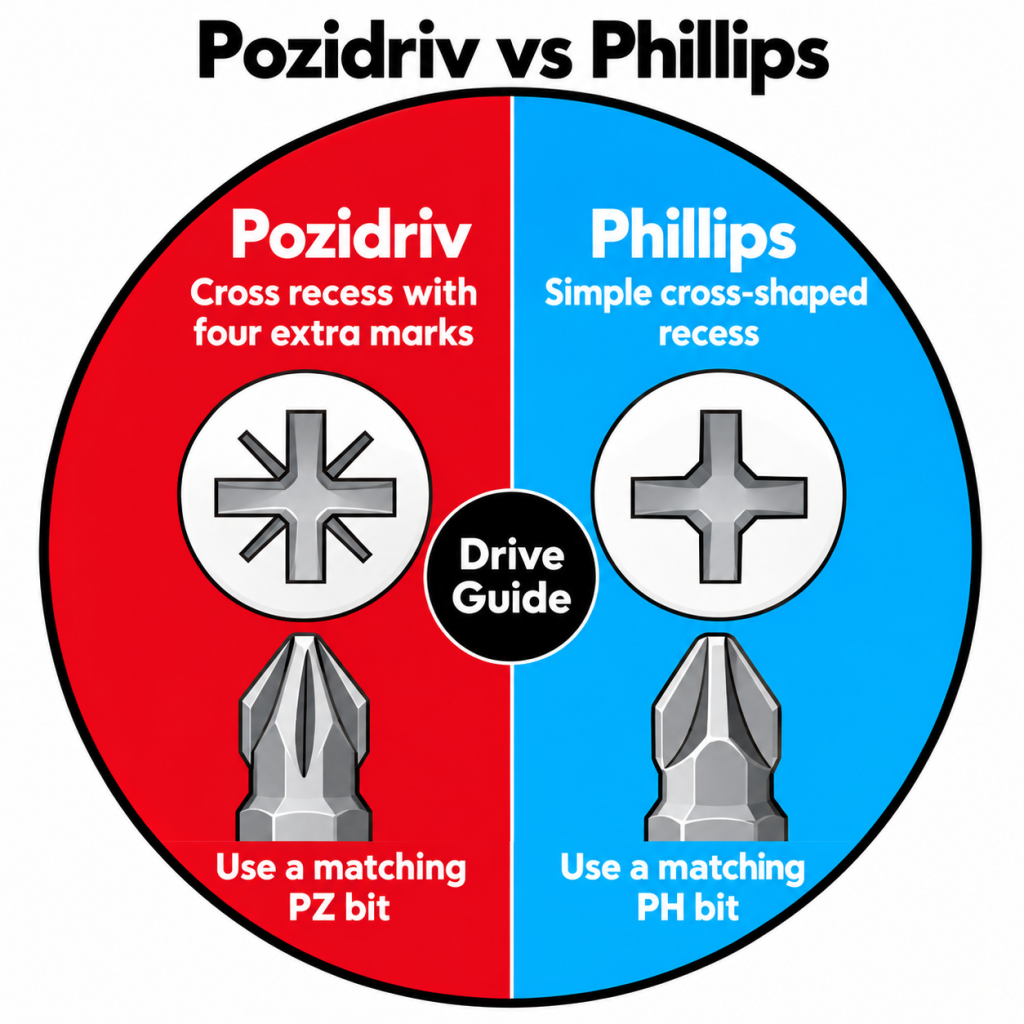
1. Look for Four Extra Lines on the Screw Head
A Phillips screw has one clear cross-shaped recess.
A Pozidriv screw has that same main cross, plus four smaller diagonal marks between its arms. These marks are the easiest visual clue.
Use a flashlight when checking screws inside concealed hinges or cabinet hardware. Plating, dust, and wear can make the smaller marks harder to see.
2. Check the Screwdriver Tip
Phillips drivers have four tapered wings that form a pointed cross.
Pozidriv drivers have four main wings and four additional ribs between them. The tip is also shaped differently to engage the Pozidriv recess.
Look for the stamped bit markings:
- PH: Phillips screwdriver or bit
- PZ: Pozidriv screwdriver or bit
The number after the letters identifies the point size. For example, PH2 means Phillips size 2, while PZ2 means Pozidriv size 2.
3. Test the Fit Before Using a Power Tool
Place the screwdriver into the screw head by hand.
A correctly sized bit should seat securely without excessive side-to-side movement. If the bit wobbles, sits unusually high, or requires force to engage, stop and check the drive type and size.
Some screw heads have faint or missing identification marks. When visual inspection is unclear, check the fastener specifications rather than guessing.
Can You Use a Phillips Screwdriver on a Pozidriv Screw?
A Phillips screwdriver may enter a Pozidriv screw recess, but it does not engage the driving surfaces correctly.
The mismatched profiles create play between the tool and screw. Under load, the Phillips tip can slip or cam out.
This can cause rounded screw heads, damaged bits, and incomplete fastening.
A Phillips bit is not a recommended substitute for a Pozidriv bit, even if it appears to fit.
Can You Use a Pozidriv Screwdriver on a Phillips Screw?
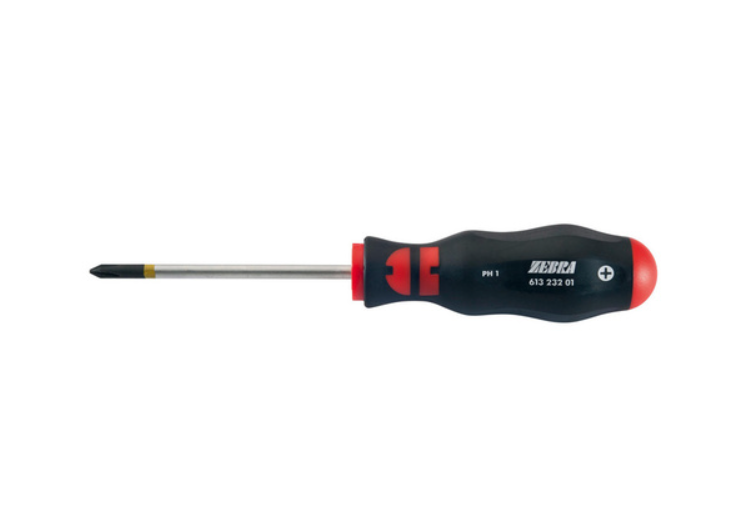
A Pozidriv screwdriver is also unsuitable for a Phillips screw.
Its additional ribs and different tip geometry can prevent it from seating fully in the Phillips recess.
Applying force can damage the screw head or driver tip.
For cabinet installers, this becomes a problem when working with small hinge screws and adjustments that need a precise fit. A damaged screw head can make future service or removal difficult.
PH2 vs PZ2: Why Screwdriver Size Matters
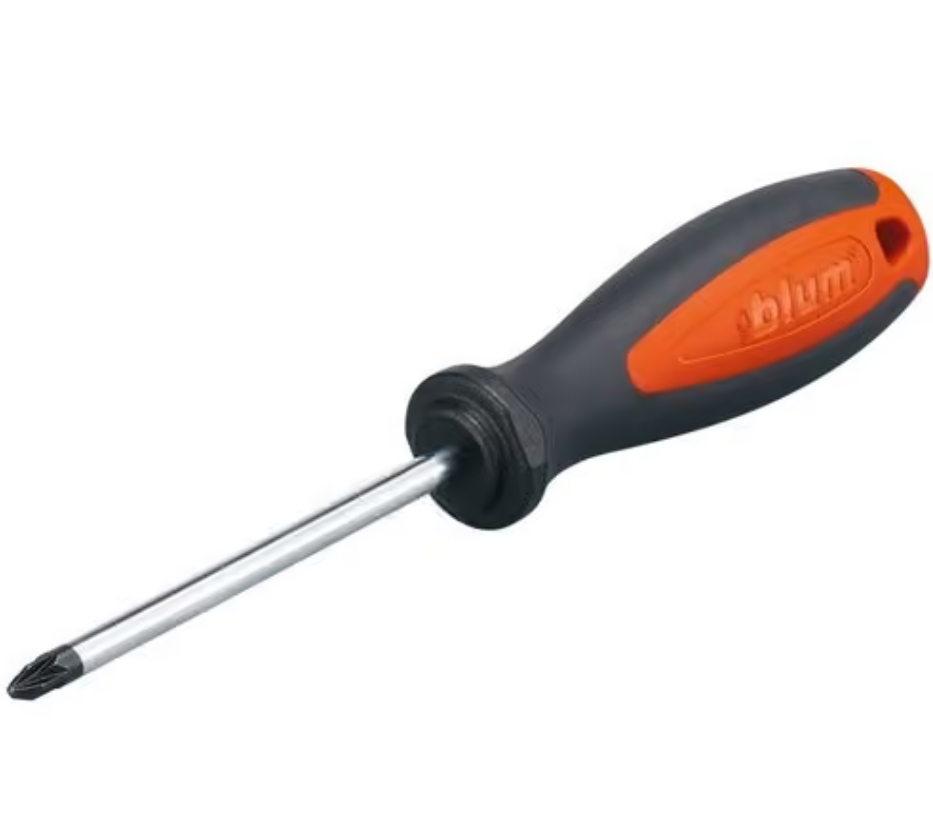
PH2 and PZ2 are both size 2 screwdriver bits, but they are not the same tool.
The letters identify the drive profile. The number identifies the tip size within that profile.
Even when the numbers match, the different geometry prevents proper engagement.
| Bit marking | Drive type | What it fits |
|---|---|---|
| PH1 | Phillips size 1 | Smaller Phillips recesses |
| PH2 | Phillips size 2 | Phillips screws specifying a #2 drive |
| PH3 | Phillips size 3 | Larger Phillips recesses specifying a #3 drive |
| PZ1 | Pozidriv size 1 | Smaller Pozidriv recesses |
| PZ2 | Pozidriv size 2 | Pozidriv screws specifying a #2 drive |
| PZ3 | Pozidriv size 3 | Larger Pozidriv recesses specifying a #3 drive |
Do not select screwdriver size based only on the screw’s thread diameter.
For example, Würth Louis and Company carries Pozidriv Euro screws that specify a #2 drive and larger confirmat screws that specify a #3 drive.
The correct bit depends on the screw’s recess specification, not just its length, diameter, or application.
Pozidriv vs Phillips for Cabinet Hardware: Which Is Better?
For professional cabinetry, the best choice depends on the hardware, fastener specifications, and installation method.
Pozidriv provides improved grip for compatible screws. Phillips remains a practical choice for hardware designed around Phillips fasteners.
The important detail is that different parts of the same cabinet may require different screwdriver bits.
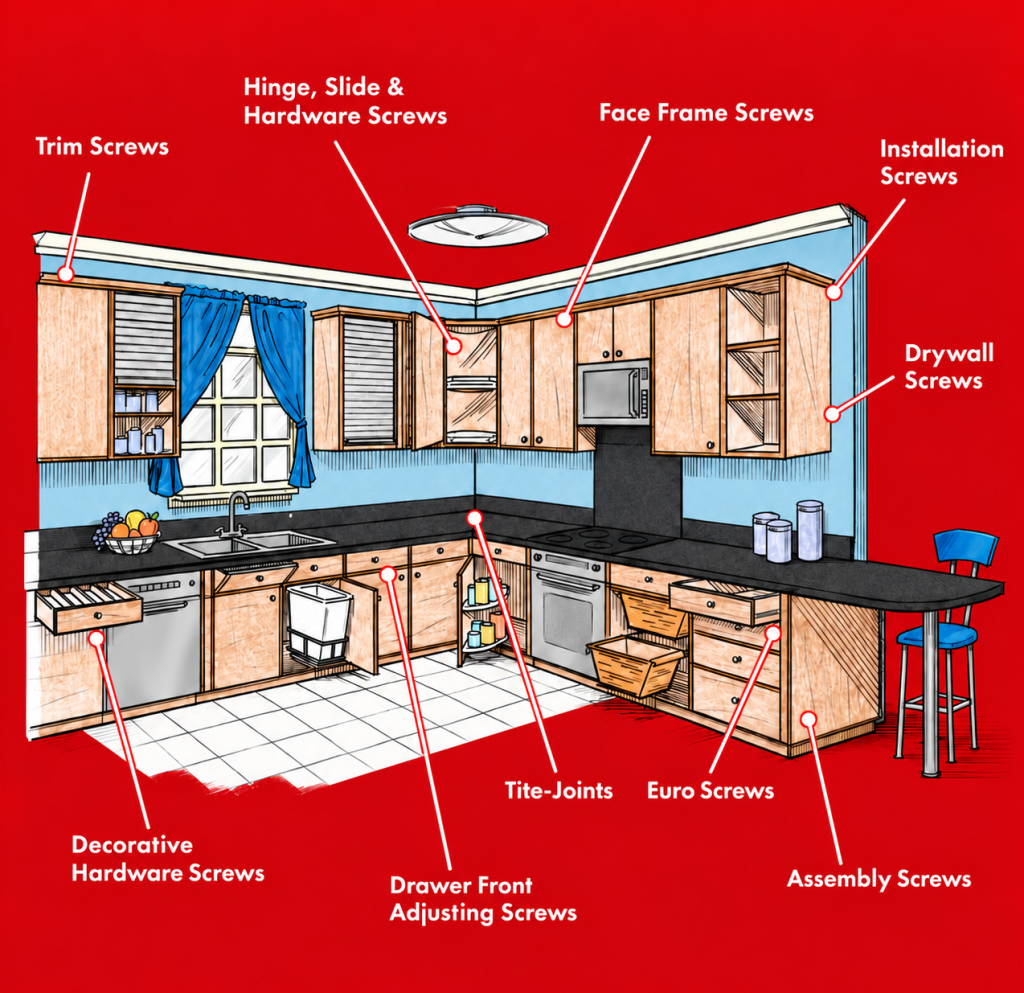
European Concealed Hinges and Mounting Plates
Pozidriv is common in European cabinet hardware, especially concealed hinge adjustment screws.
For example, Blum recommends a #2 Pozidriv driver for its hinge adjustment screws. The company’s hardware documentation also lists both Phillips and Pozidriv mounting screws.
This distinction matters. A hinge adjustment screw may require PZ2, while a separate screw that secures the hinge or mounting plate may require PH2.
Always confirm the drive type of each fastener rather than assuming every screw in a European hinge assembly uses Pozidriv.
Drawer Slides and Euro Screws
Many cabinet shops use Euro screws to attach hinge plates and drawer slides to predrilled cabinet panels.
These screws often feature blunt points and threads designed for system holes.
Pozidriv versions can provide secure bit engagement during repeated installation.
For example, the Blum #5 x 14.5 mm Pozidriv Euro screw available through Würth Louis and Company specifies a #2 Pozidriv drive.
Standard Hinge and Drawer Slide Installation Screws
Phillips screws remain common for mounting cabinet hinges, drawer slides, and other hardware.
The Würth #6 x 5/8-inch Phillips hinge and drawer slide screw uses a PH2 drive and features a Type 17 auger point.
Its extra-deep Phillips recess helps minimize bit slippage. This shows why the quality of the screw recess also matters, not just whether the drive is Phillips or Pozidriv.
Confirmat Screws for Cabinet Assembly
Confirmat screws are common in cabinet and casework construction, particularly when joining engineered wood panels.
Some use Pozidriv recesses to support a secure connection between the screw and driver.
However, not every confirmat screw uses the same bit size.
For example, Würth’s #7 x 50 mm Pozidriv confirmat screw specifies a #3 Pozidriv drive, not PZ2. It is intended for applications such as ready-to-assemble and knock-down casework.
This makes checking the fastener’s drive size essential when switching between hardware installation and cabinet assembly.
Quick Selection Guide for Cabinet Shops
| Application | Drive to look for | Selection tip |
|---|---|---|
| European hinge adjustments | Often PZ2 | Follow the hinge manufacturer’s specification |
| Euro screws for mounting plates | Often PZ2 | Confirm the product’s listed drive size |
| Standard hinge mounting screws | Often PH2 | Check the fastener rather than the hinge brand |
| Drawer slide installation | PH or PZ | Match the screw supplied or selected |
| Confirmat cabinet assembly | Varies, including PZ2 and PZ3 | Verify the exact confirmat screw specification |
Does Pozidriv Provide More Torque Than Phillips?
Pozidriv generally transfers more torque before cam-out than a comparable Phillips drive when both use properly matched bits.
The difference comes from its driving surfaces.
With Phillips screws, the tapered recess produces an upward force on the driver during tightening. As resistance increases, the driver becomes more likely to slip out.
Pozidriv reduces this effect through its more parallel driving surfaces and additional engagement points.
This can help installers maintain better control when fastening cabinet hardware.
However, three important limits apply.
Higher Torque Transfer Does Not Mean a Stronger Screw
The drive design affects how effectively the tool turns the screw.
It does not automatically increase the screw’s tensile strength, thread holding power, or resistance to pull-out.
Those properties also depend on the screw material, thread design, length, diameter, and the substrate.
Less Cam-Out Does Not Prevent Overtightening
Pozidriv provides a firmer connection between the driver and recess. That also means the tool may keep transferring torque after the fastener reaches its intended seating point.
In MDF, particleboard, or other cabinet materials, excessive torque can damage the threads or strip the hole.
Use an appropriate clutch setting or torque-controlled tool, and follow the fastener and hardware manufacturer’s requirements.
There is No Single Torque Advantage That Applies to Every Screw
The actual difference depends on bit wear, recess quality, screw size, materials, and installation conditions.
A percentage claim without controlled testing is not a reliable basis for selecting cabinet fasteners.
The practical advantage of Pozidriv is better driver engagement, not unlimited tightening force.
How to Prevent Stripped Screws During Cabinet Installation
Selecting the right bit is the first step. The installation process also affects screw life, hardware performance, and production efficiency.
Step 1: Match the Drive Type and Point Size
Check both the screw specification and the bit marking.
Use PH2 for a PH2 screw and PZ2 for a PZ2 screw. If the hardware calls for PZ3, switch to the correct size.
Do not use a smaller bit just because it fits inside the recess.
Step 2: Check the Screw Hole and Substrate
Make sure the screw is suitable for the cabinet material and installation hole.
For example, Euro screws often require correctly sized, predrilled system holes. Confirmat screws also have specific drilling requirements.
The wrong hole size can increase driving resistance or weaken thread engagement, regardless of the screwdriver type.
Step 3: Keep the Driver Aligned
Hold the screwdriver in line with the screw axis.
Angled driving can reduce bit contact and damage the recess. Apply steady pressure and avoid forcing the screw if it starts to bind.
Use a suitable bit extension or holder when working inside deep cabinets or tight hinge locations.
Step 4: Set the Drill Clutch Correctly
Start with a controlled setting and test the fastener in the same material and hole configuration used for production.
Increase the setting only as needed to seat the screw without damaging the hardware or substrate.
For delicate hinge adjustments, a hand screwdriver may provide better control than a power tool.
Step 5: Replace Worn Screwdriver Bits
Inspect bits for rounded edges, damaged ribs, and excessive wear.
A worn PZ2 bit can slip even when used with the correct PZ2 screw.
Replacing a worn bit is usually less disruptive than removing a stripped fastener or replacing damaged cabinet hardware.
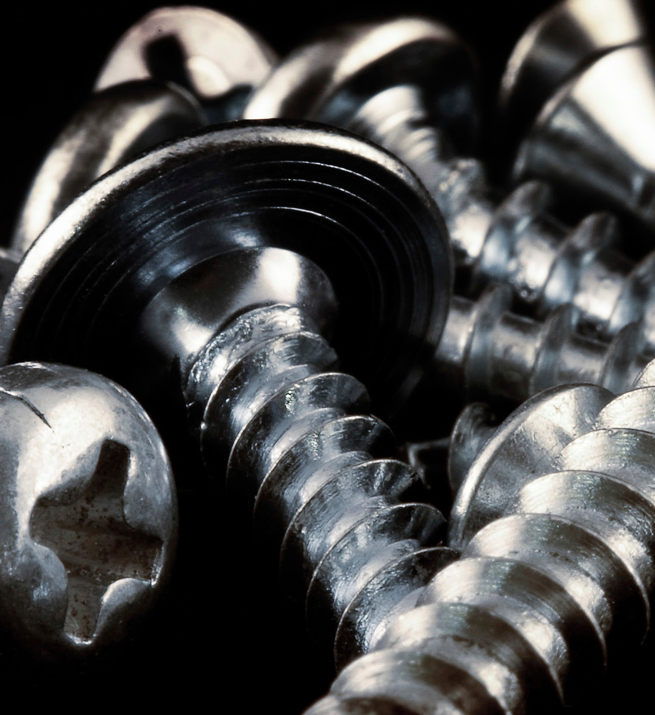
Troubleshooting: Why Does My Screwdriver Keep Slipping?
If a bit repeatedly slips during installation, the problem may involve more than drive type.
Use this guide to narrow down the cause before continuing.
| Problem | Likely cause | What to do |
|---|---|---|
| Bit wobbles inside the screw head | Wrong drive or point size | Confirm PH or PZ and select the correct size |
| Bit will not seat fully | Incorrect bit profile or damaged recess | Inspect the bit and screw head |
| Bit slips as resistance increases | Cam-out, poor alignment, or worn bit | Check fit, alignment, and driver condition |
| Screw head rounds before seating | Excess torque, wrong bit, or high driving resistance | Reduce torque and check the hole and fastener |
| Screw turns without tightening | Damaged substrate threads | Inspect and repair the hole using an approved method |
| Hinge adjustment screw becomes difficult to turn | Incorrect bit or adjustment at its travel limit | Check the specified driver and hinge adjustment range |
A useful shop rule is to investigate repeated slippage before increasing drill torque.
More torque will not correct a mismatched screwdriver bit.
Which Screwdriver Bits Should Cabinet Shops Keep on Hand?
A shop that works with both traditional cabinet hardware and European fittings should stock Phillips and Pozidriv bits in the sizes its hardware requires.
PH2 and PZ2 are useful starting points for many common installations. Shops that use larger Pozidriv confirmat screws may also need PZ3.
Würth Louis and Company carries driver bits and screwdrivers for professional installation work.
Useful options include:
| Tool | Practical use |
|---|---|
| #2 Pozi Drive screwdriver for hinges | Manual adjustment of compatible European hinge hardware |
| PH2 insert bits | Standard Phillips mounting screws |
| PZ2 insert bits | Pozidriv Euro screws and compatible hinge hardware |
| PZ3 insert bits | Larger Pozidriv screws, including certain confirmat fasteners |
| Magnetic bit holders | Improved bit handling and faster changes during installation |
For production work, label PH and PZ bit storage clearly. Keeping them separate reduces the chance of using a familiar-looking but incorrect bit.
It also helps installers switch between tasks without repeatedly stopping to identify tools.
Final Takeaway: Match the Drive to the Fastener
Pozidriv and Phillips screws serve many of the same fastening needs, but their drive profiles are different.
Pozidriv provides better torque transfer and resistance to cam-out. Phillips remains a reliable option for hardware designed for its tapered cross-head profile.
For cabinet shops, the most important decision is not which drive is universally better. It is which drive matches the hardware being installed.
Check the screw head, confirm the drive size, and use a properly fitted screwdriver bit. These simple steps protect cabinet hardware, reduce stripped fasteners, and support consistent installation.
Explore screws and fasteners and professional driver bits at Würth Louis and Company to find the right combination for your next cabinet or millwork project.