
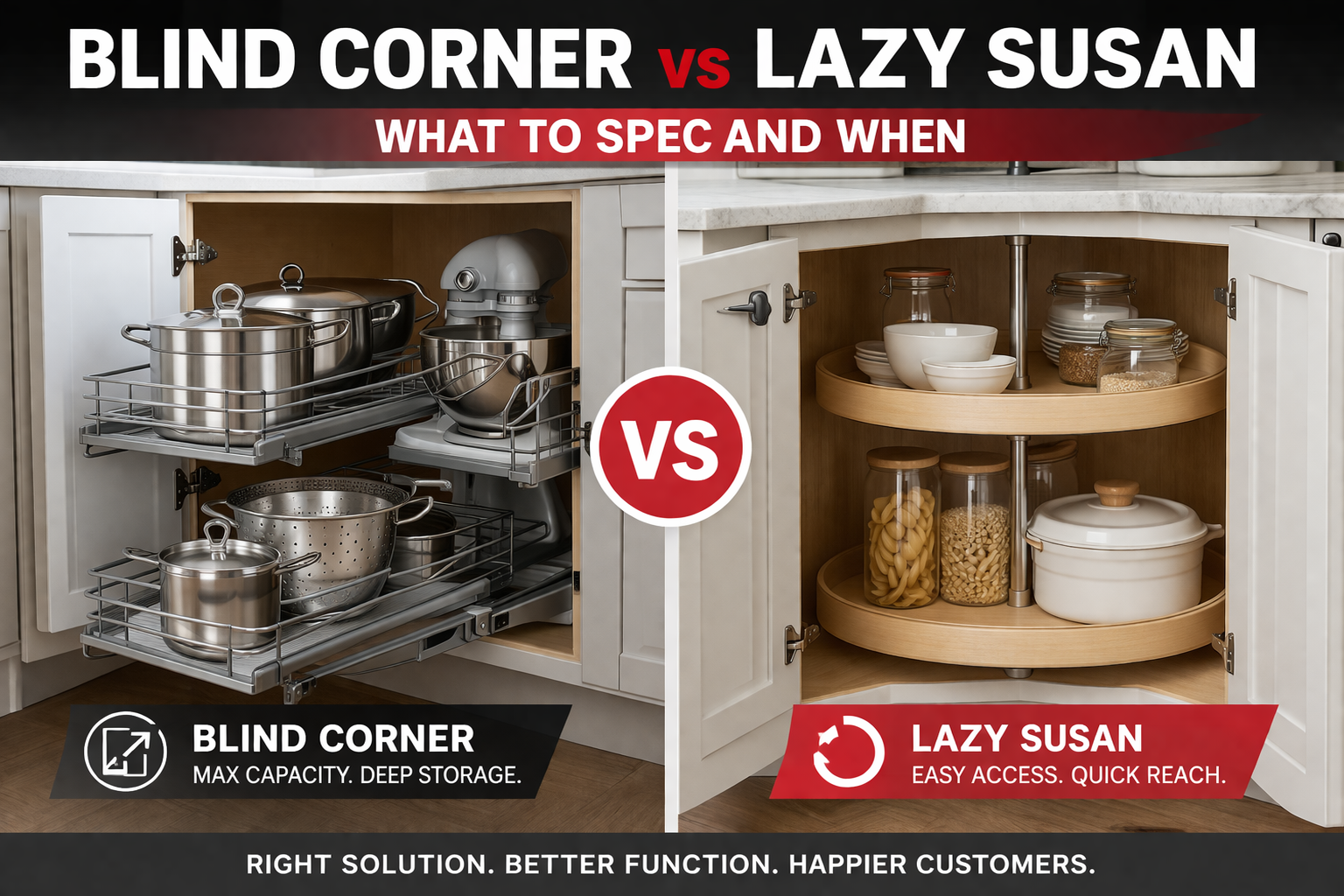
When you are choosing a corner cabinet solution for a kitchen remodel, the right answer is usually simple. Spec a Lazy Susan when the homeowner wants faster daily access. Spec a blind corner when they need more usable storage for larger items and are willing to trade some convenience for capacity. This the core difference between blind corners and lazy susans.
For contractors, the decision should not stop at storage alone. You also need to think about opening width, filler requirements, adjacent cabinet or appliance clearance, homeowner mobility, and what the customer actually plans to store in that corner. Blind corner hardware can improve access significantly, but it also adds cost and installation complexity.
Quick Comparison Table: Blind Corner vs Lazy Susan
| Decision Factor | Blind Corner | Lazy Susan | Best Choice When |
|---|---|---|---|
| Access | Deeper reach unless upgraded with pull-out hardware | Fast access with rotating shelves | Choose Lazy Susan for daily-use storage |
| Storage capacity | Better for bulky items and fuller use of corner volume | Less efficient use of corner footprint due to round trays | Choose Blind Corner for max capacity |
| Best contents | Pots, pans, mixers, small appliances, less-used cookware | Spices, oils, bowls, lighter everyday items | Match to what the customer stores |
| User convenience | Better with optimizer hardware | Strong out of the box | Choose Lazy Susan for ease of use |
| Installation considerations | May need fillers, handedness planning, hardware selection | Requires correct sizing and precise install for smooth rotation | Choose based on layout and labor scope |
| Budget direction | Cabinet can be simpler, but organizer upgrades add cost | Mechanism-driven solution, often higher initial convenience cost | Compare total installed package, not cabinet box alone |
Blind Corner vs Lazy Susan: The Real Difference
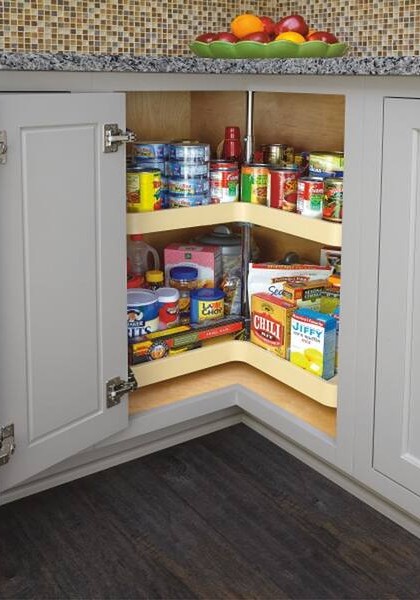
A Lazy Susan is usually the better spec when the homeowner values access over raw storage. Rotating shelves bring items to the front, which makes the cabinet easier to use every day. That is why these units are commonly recommended for smaller, lighter items that get used often.
A blind corner cabinet usually wins when the goal is to capture more of the corner for storage. Because it uses more of the cabinet footprint, it can handle larger cookware and small appliances more effectively than a round shelf system. The tradeoff is access. Without added hardware, items in the back are harder to reach.
For most renovation projects, that means the spec should follow the homeowner’s habits, not just the floor plan. If they cook often and need quick access, a Lazy Susan is usually easier to sell and easier to live with. If they want to hide bulkier gear and keep more overall storage, a blind corner often makes more sense.
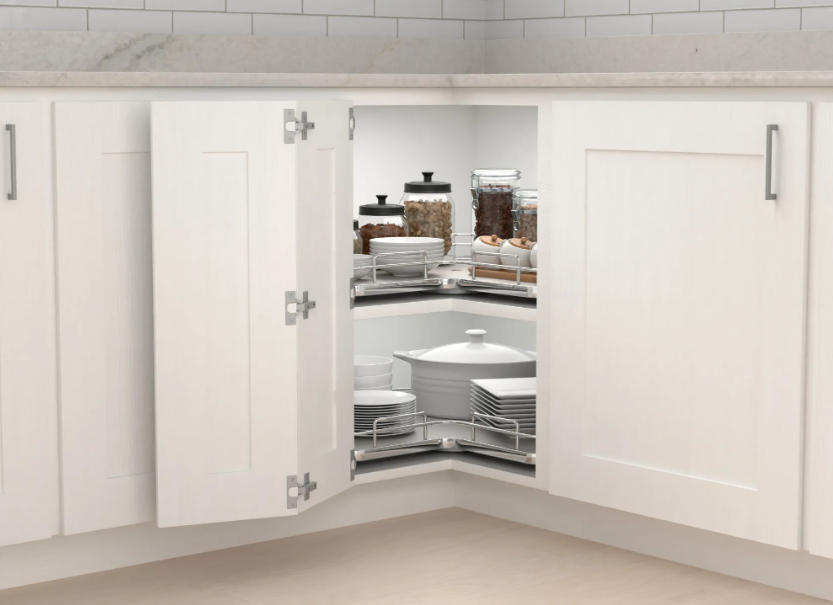
When to Spec a Lazy Susan
1. The customer wants easier day-to-day use
Lazy Susans make sense when the corner cabinet will hold items the homeowner grabs often. A rotating shelf reduces digging, reaching, and reshuffling. That convenience is the biggest reason these systems stay popular.
2. The kitchen is being designed for accessibility
The web sources do not frame this specifically as aging-in-place, but that is a reasonable contractor inference from their emphasis on easier access and reduced reaching. When a homeowner wants a more user-friendly kitchen, a Lazy Susan often supports that goal better than a basic blind corner.
3. The corner will store smaller or lighter items
Spices, oils, baking supplies, mixing bowls, and lighter cookware fit the Lazy Susan model well. The spinning action makes those categories easier to sort and retrieve.
4. The customer is willing to give up some raw space for convenience
Round trays do not use every inch of a square cabinet footprint. Nelson Cabinetry specifically notes the space loss around the curved shelf edges. Still, many homeowners accept that trade because the cabinet is easier to use.
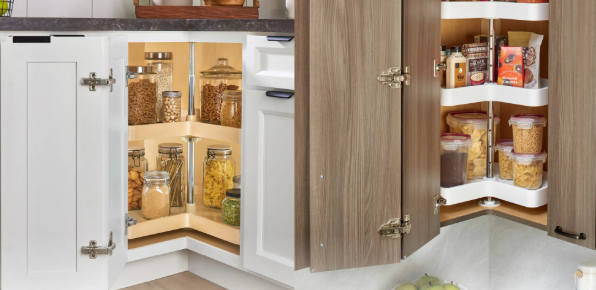
When to Spec a Blind Corner
1. The customer needs more storage for bulky items
Blind corners are the stronger choice for stand mixers, larger pots, roasting pans, and appliances that do not fit neatly on circular shelves. Both comparison sources point to bulk storage as a primary blind-corner advantage.
2. The corner is not meant for constant access
If the homeowner only needs that corner for occasional-use storage, the accessibility penalty matters less. In those cases, maximizing volume may matter more than instant access.
3. You want a more flexible hardware upgrade path
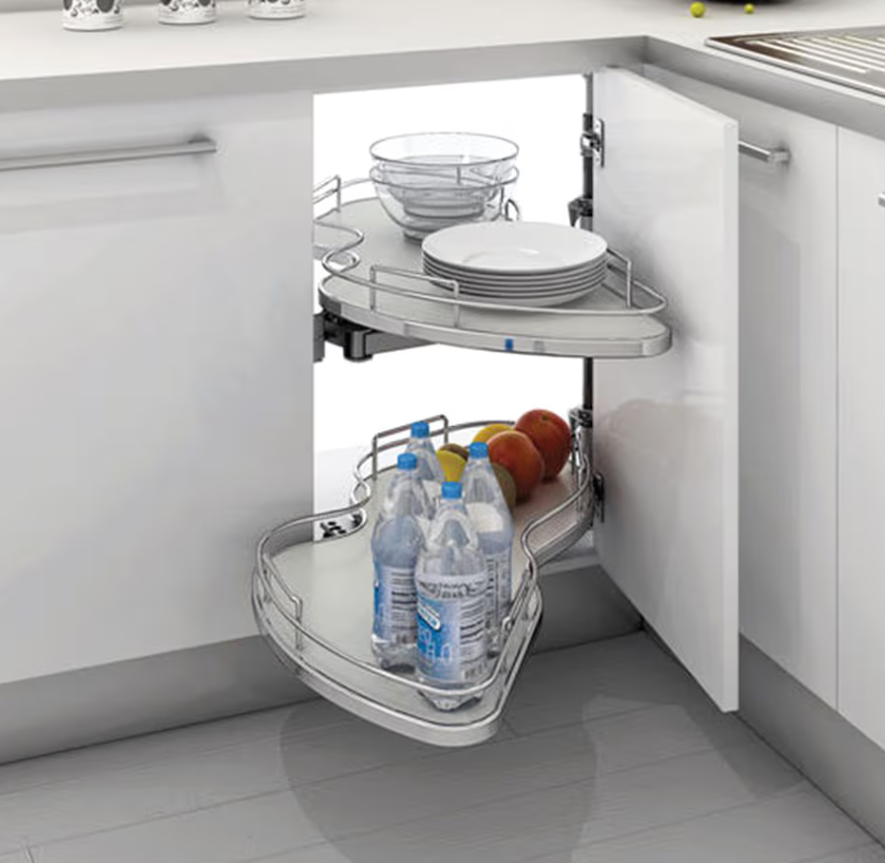
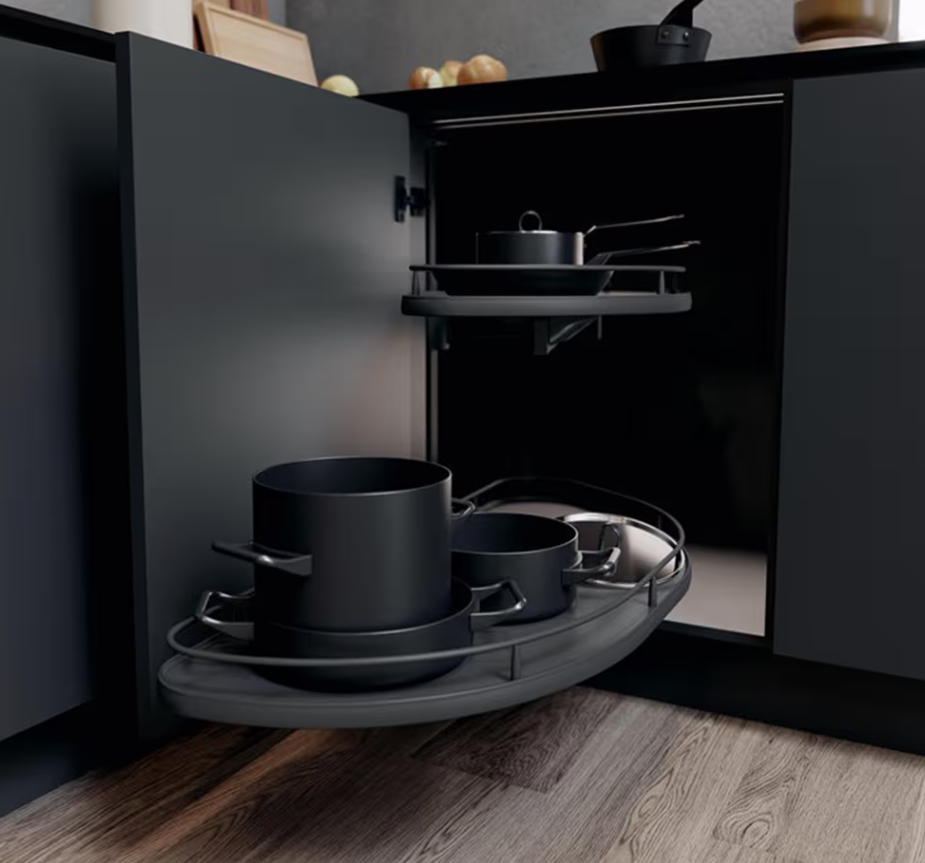
Blind corners are no longer just deep, hard-to-reach boxes. Rev-A-Shelf’s blind-corner offerings show how pull-out, swing-out, pivot, and half-moon systems can bring stored items forward and make the space more usable. That gives contractors room to scale the spec from basic to premium based on budget.
4. The homeowner wants capacity first
If the customer’s top question is “Where do I put the big stuff?” the blind corner usually gives you a better answer. That is especially true in kitchens where every base cabinet has to work hard.
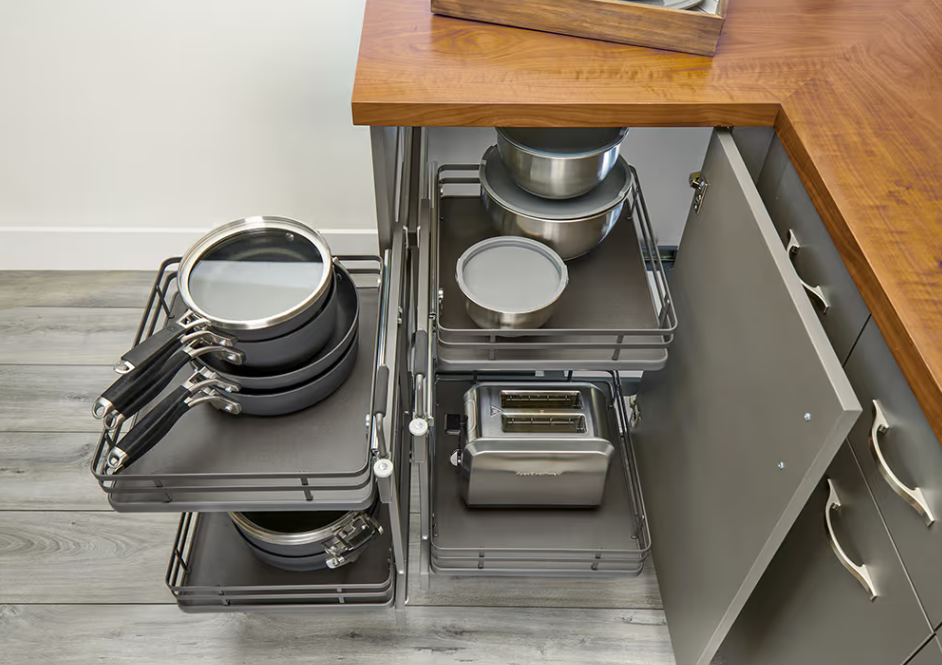
The Hardware Changes the Conversation
This is where many comparisons stay too basic. A standard blind corner and a fully optimized blind corner are not the same spec.
Rev-A-Shelf’s blind-corner systems show how modern hardware can pull front baskets out, move rear baskets into view, and in some designs allow trays to glide out on pivot hardware with soft close. One product description also notes a design that eliminates the need for adjacent appliance clearance, which can matter in tight remodel layouts.
That matters for contractors because a blind corner may be the better cabinet box, but only if the hardware package supports the way the homeowner will use it. A low-budget blind corner can become a frustration point. A well-selected blind-corner organizer can turn the same area into premium storage.
What Contractors Should Check Before They Spec Either Option
Opening and Access
Not every corner opening supports every organizer equally well. The opening style, usable width, and door path will affect what hardware can be installed and how well it performs. Nelson Cabinetry also notes that blind base cabinets often require a filler strip so the door can open properly.
Handedness and Cabinet Orientation
Blind-corner systems are often left- or right-specific. Confirm orientation early so the cabinet, filler, and hardware all work together in the field. Rev-A-Shelf’s product listings reflect this handedness in their model variations.
Adjacent Appliance and Drawer Conflicts
In renovation work, the corner is rarely isolated. Check nearby ranges, dishwashers, pulls, and drawer banks before finalizing the spec. Some premium blind-corner systems help with clearance issues, but that is not universal across all products.
What the Homeowner Will Actually Store
This is still the fastest way to make the right call. Ask the customer to name the exact items that will go in the corner. Daily-use pantry and prep items lean Lazy Susan. Bulky cookware and occasional-use appliances lean blind corner.
Best for Different Remodeling Scenarios
Choose a Lazy Susan when:
- The homeowner wants quick daily access
- The corner will hold lighter, frequently used items
- Ease of use matters more than maximum volume
- The customer is likely to notice poor accessibility right away
Choose a Blind Corner when:
- The project needs more overall storage capacity
- The corner will hold large or bulky items
- You can justify upgraded organizer hardware
- The kitchen layout benefits from a blind-corner configuration more than a rotating shelf cabinet
Final Verdict: Blind Corner vs Lazy Susan
For most contractor-led home renovation projects, a Lazy Susan is the safer spec when the customer prioritizes convenience, daily function, and simpler access. A blind corner is the stronger spec when storage capacity matters more and the budget allows you to match the cabinet with the right organizer hardware.
The best answer is not which one is universally better. It is which one fits the homeowner’s habits, the cabinet opening, and the installation conditions on that specific job.