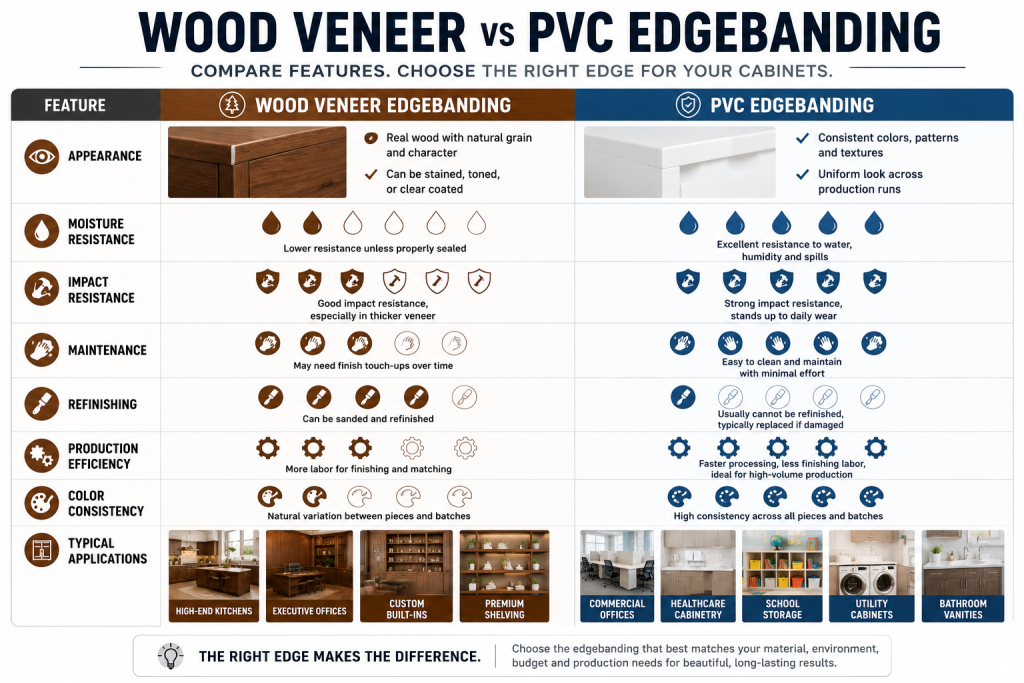
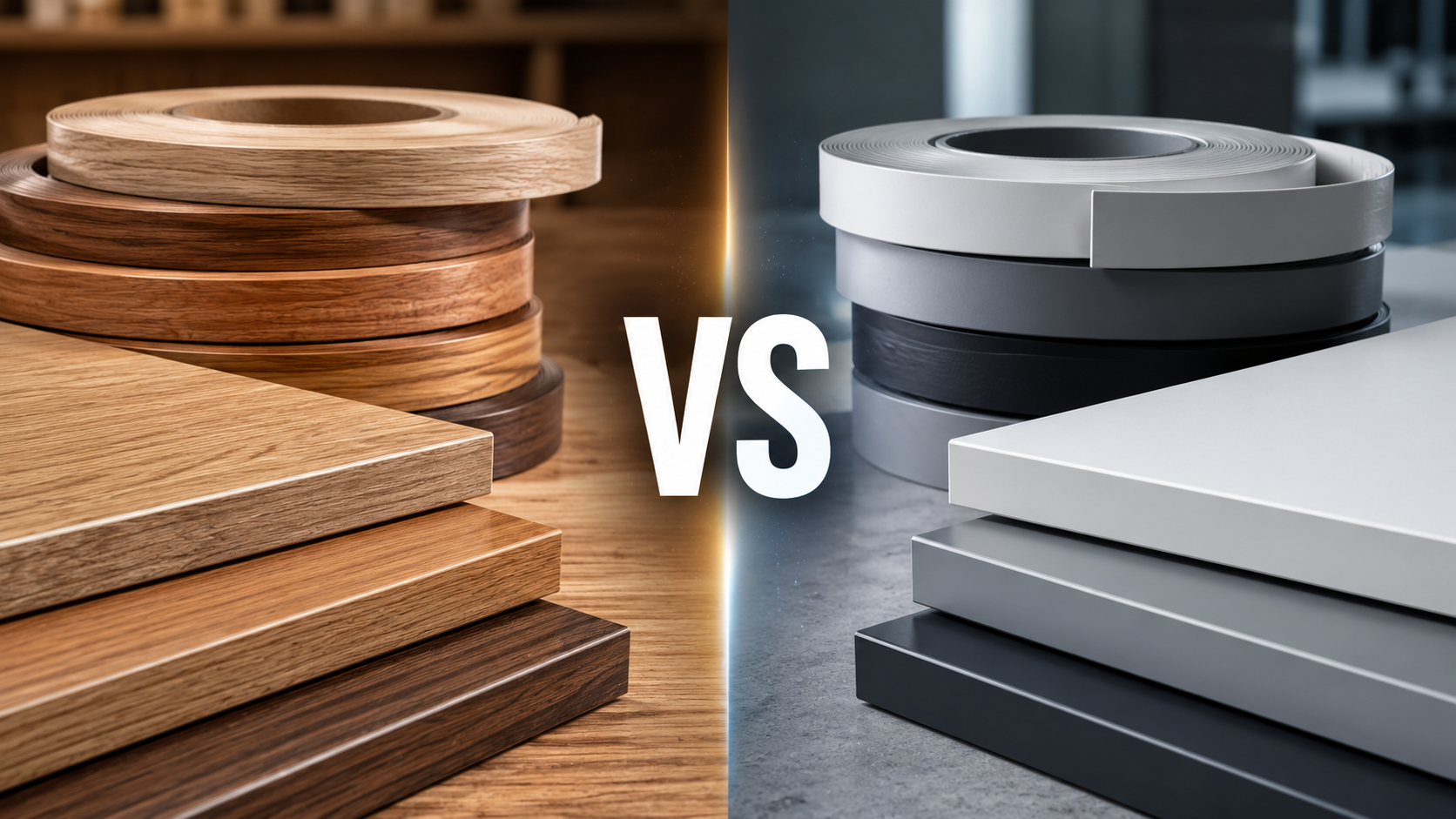
Wood veneer edgebanding is usually the best choice when custom cabinets need an authentic wood edge that can be stained and finished with the panel. PVC edgebanding is often better for cabinets that need consistent color, strong impact resistance, easy maintenance, and better performance around moisture.
The right choice depends on the cabinet material, finish, location, expected use, and production process. A high-end walnut kitchen may call for matching walnut veneer. Commercial casework, utility cabinets, or high-use laminate cabinets may perform better with PVC.
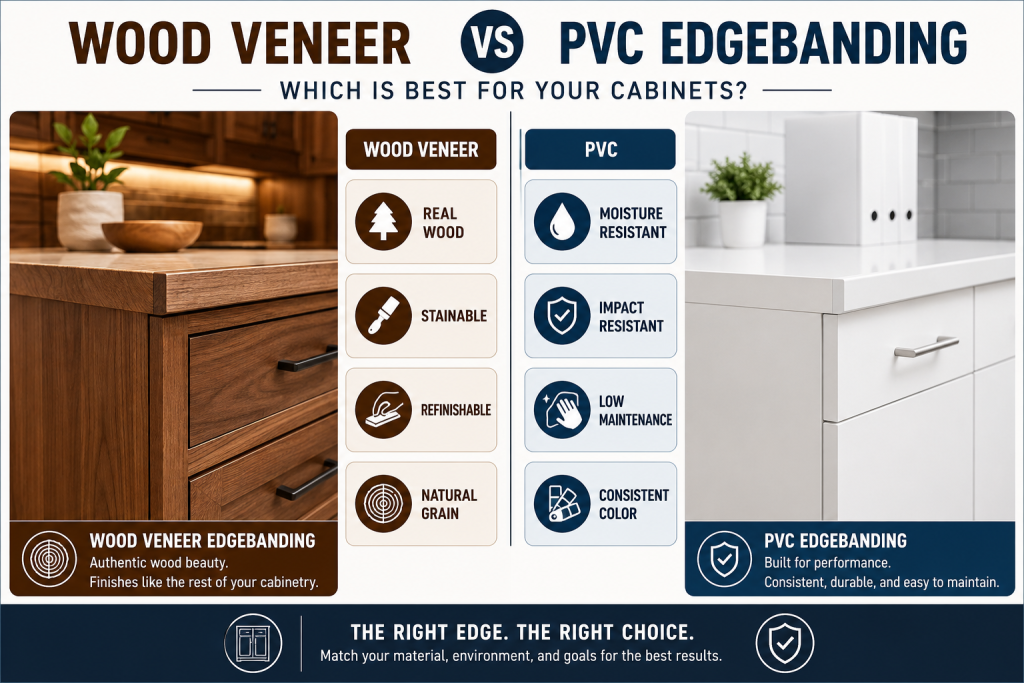
Quick Skim: Wood Veneer vs PVC Edgebanding
| Decision Factor | Wood Veneer Edgebanding | PVC Edgebanding |
|---|---|---|
| Best for | Stained wood cabinets and premium millwork | Laminate, melamine, painted, and commercial cabinets |
| Appearance | Real wood grain and natural variation | Consistent colors, patterns, and textures |
| Finishing | Can be sanded, stained, and clear coated | Usually arrives with a finished surface |
| Moisture resistance | Lower than PVC unless properly sealed | Strong moisture resistance |
| Impact resistance | Good, especially in thicker options | Strong, especially in thicker options |
| Color consistency | Natural variation between sections | High consistency across production runs |
| Maintenance | May need finish touch-ups | Easy to clean and maintain |
| Repair options | Can often be sanded and refinished | Usually replaced rather than refinished |
| Production fit | Custom woodwork and stain-grade projects | Repeatable, high-volume panel processing |
| Typical cost | Often higher, especially for premium species | Often more economical |
What Is Wood Veneer Edgebanding?
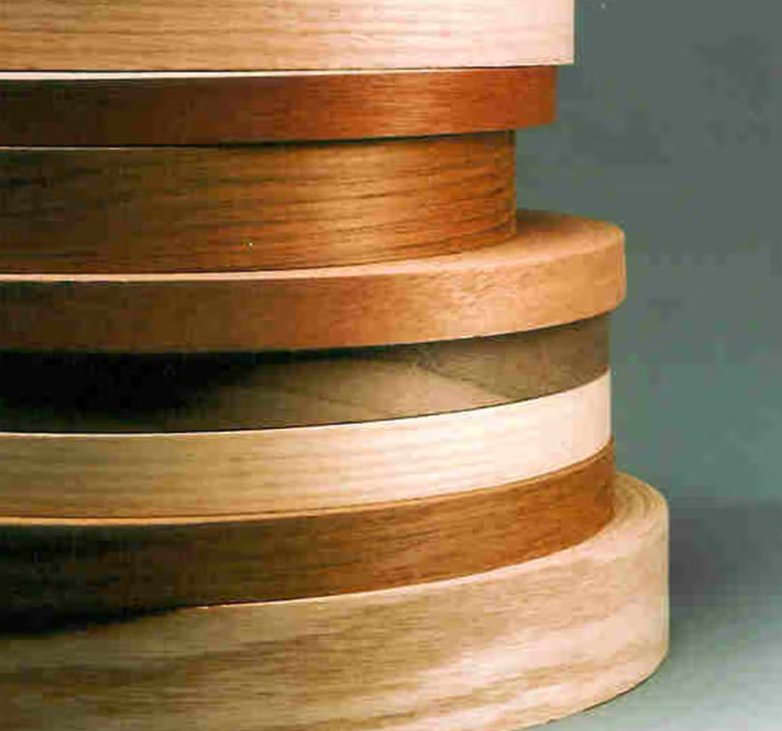
Wood veneer edgebanding consists of thin strips of real wood that cover exposed plywood, particleboard, or MDF edges. Manufacturers offer it in many species, including maple, oak, cherry, walnut, birch, and other common cabinet woods.
Because veneer is real wood, it can closely match a wood-veneer panel. Cabinetmakers can sand, stain, oil, paint, or clear coat it as part of the finishing process. This makes it a strong option for stain-grade cabinetry where the finished edge should look like part of the panel instead of a separate strip.
Wood veneer edgebanding comes in preglued and non-glued formats. It is also available in several thicknesses. Thin veneer creates a subtle edge, while thicker, multi-ply veneer can provide greater impact resistance and a more substantial appearance.
Advantages of Wood Veneer Edgebanding
It creates an authentic wood appearance.
Natural grain, color variation, and texture help the edge blend with veneered panels. This matters on visible cabinet ends, shelves, doors, and premium millwork.
It accepts stain and finish.
A finisher can adjust the veneer with stain, toner, clear coat, or paint. That flexibility helps custom shops match doors, face frames, panels, and other wood parts.
It can be repaired and refinished.
Minor damage to thicker veneer may be sanded and touched up. Care is still required because aggressive sanding can cut through the face layer.
It supports custom design work.
A broad range of species, widths, thicknesses, and backings helps shops match both common and specialized wood panels.
Limitations of Wood Veneer Edgebanding
Wood veneer does not provide the same moisture resistance as PVC. The finish must fully seal the edge when cabinets will face splashes, humidity, or frequent cleaning.
Natural grain and color also vary. This variation adds character, but it can make exact matching harder across large production runs.
Veneer may require more labor because the edge often needs trimming, sanding, staining, and finishing. Poor sanding can expose lower veneer layers or change the edge profile.
What Is PVC Edgebanding?
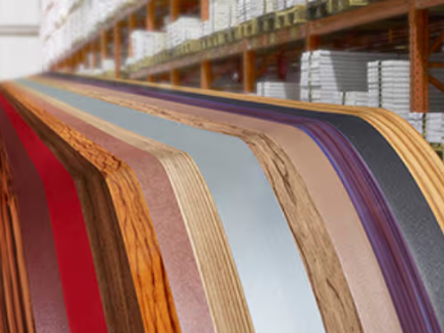
PVC edgebanding is a flexible plastic strip made to cover the exposed edges of plywood, MDF, particleboard, melamine, and other panel products. It is available in solid colors, woodgrain patterns, textures, gloss levels, widths, and thicknesses.
PVC gives cabinet shops a consistent, finished edge without the natural variation found in wood. It works well with thermally fused laminate, melamine, decorative panels, office furniture, institutional casework, store fixtures, and many kitchen applications.
Many PVC products use solid-color construction that allows clean trimming and edge rounding. The back of the material may also include a bonding agent designed for compatible hot-melt or solvent-based adhesives. Always confirm the adhesive, machine settings, and processing requirements for the specific product.
Advantages of PVC Edgebanding
It resists moisture.
PVC does not absorb water like natural wood. This makes it a practical option for kitchens, bathrooms, break rooms, laboratories, locker rooms, and other spaces where cabinets may face spills or humidity.
It handles daily wear.
PVC offers strong resistance to impact, chemicals, and routine cleaning. Thicker PVC can add protection to shelf fronts, cabinet doors, drawer fronts, and other exposed edges.
It delivers consistent color.
PVC helps shops maintain a uniform look across cabinet runs. It can match solid-color panels, woodgrain laminates, or contrasting design details.
It can reduce finishing labor.
The material already has its final color and surface. After proper application, trimming, scraping, and buffing, the edge does not need stain or clear coat.
It works well in repeat production.
PVC is a good fit for shops that process large quantities of decorative panels with an automatic edgebander.
Limitations of PVC Edgebanding
PVC woodgrains may look realistic, but they do not have the grain depth, texture, or natural variation of real wood veneer. This difference may become more visible on high-end stain-grade cabinets.
PVC cannot be stained to correct a color mismatch. The shop must select the right match before production.
Damaged PVC is also difficult to refinish. In most cases, the affected section must be removed and replaced. PVC can also react to excessive heat, so shops should follow the material supplier’s recommended processing and service-temperature limits.
Which Edgebanding Looks Better on Custom Cabinets?
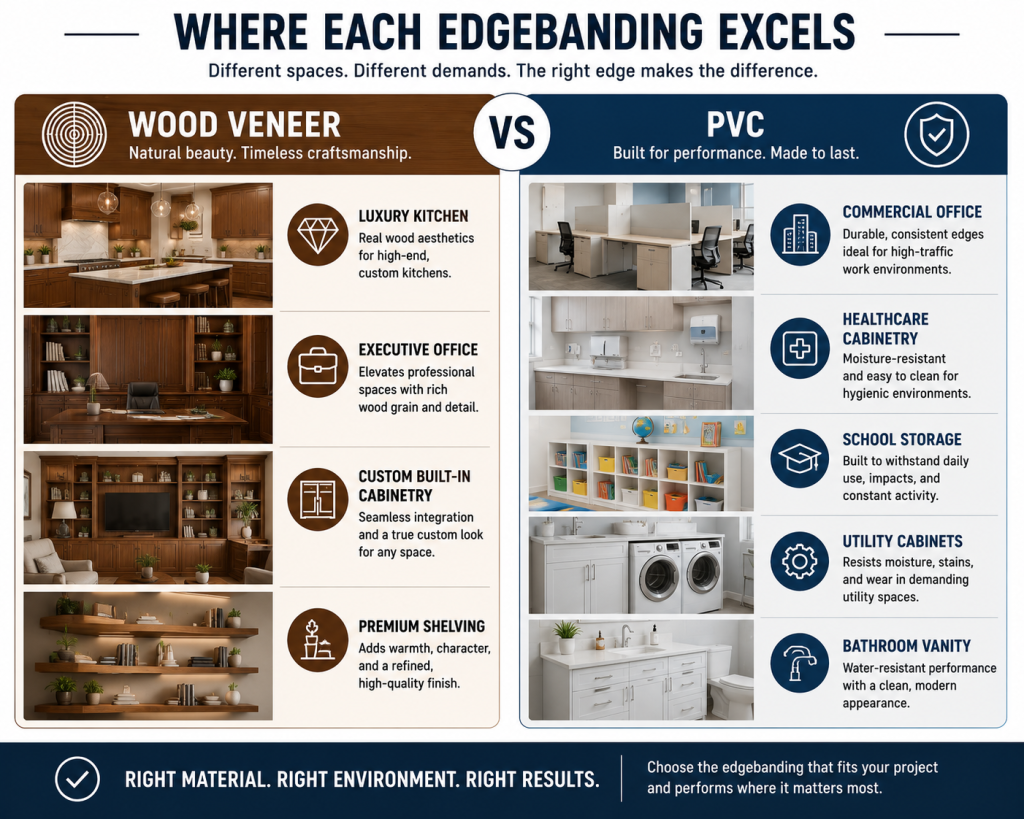
Choose wood veneer when the cabinet uses a real wood face and the customer expects a natural, furniture-grade finish.
Good applications include:
- Stained plywood cabinet boxes
- Visible shelves with wood veneer faces
- Custom walnut, oak, maple, or cherry millwork
- Residential kitchens with natural wood finishes
- Executive offices and high-end reception areas
- Projects that require custom stain matching
Choose PVC when the cabinet uses a decorative panel with a repeatable color or printed pattern.
Good applications include:
- Melamine cabinet interiors
- Thermally fused laminate panels
- Solid-color slab doors
- Commercial casework
- Retail fixtures
- Educational and healthcare cabinets
- High-use kitchens, bathrooms, and utility spaces
A PVC woodgrain may coordinate well with a decorative panel, while natural veneer will usually match a real wood panel more closely.
How to Choose the Right Edgebanding Thickness
Thickness affects the cabinet’s look, impact resistance, machining needs, and material cost.
Thin edgebanding creates a subtle edge and works well on low-contact cabinet parts or interior components.
Medium thicknesses balance appearance, protection, and processing speed for general cabinet production.
Thicker edgebanding provides more material at exposed edges. It is often used on doors, drawer fronts, shelves, countertops, desks, and commercial casework.
Both veneer and PVC are commonly available in multiple thicknesses, often from about 0.5 mm through 3 mm. Confirm that the edgebander, trimming units, corner-rounding tools, and tooling can process the selected material.
Which Option Is More Durable?
Durability depends on the material thickness, adhesive, edge preparation, machine setup, and cabinet environment.
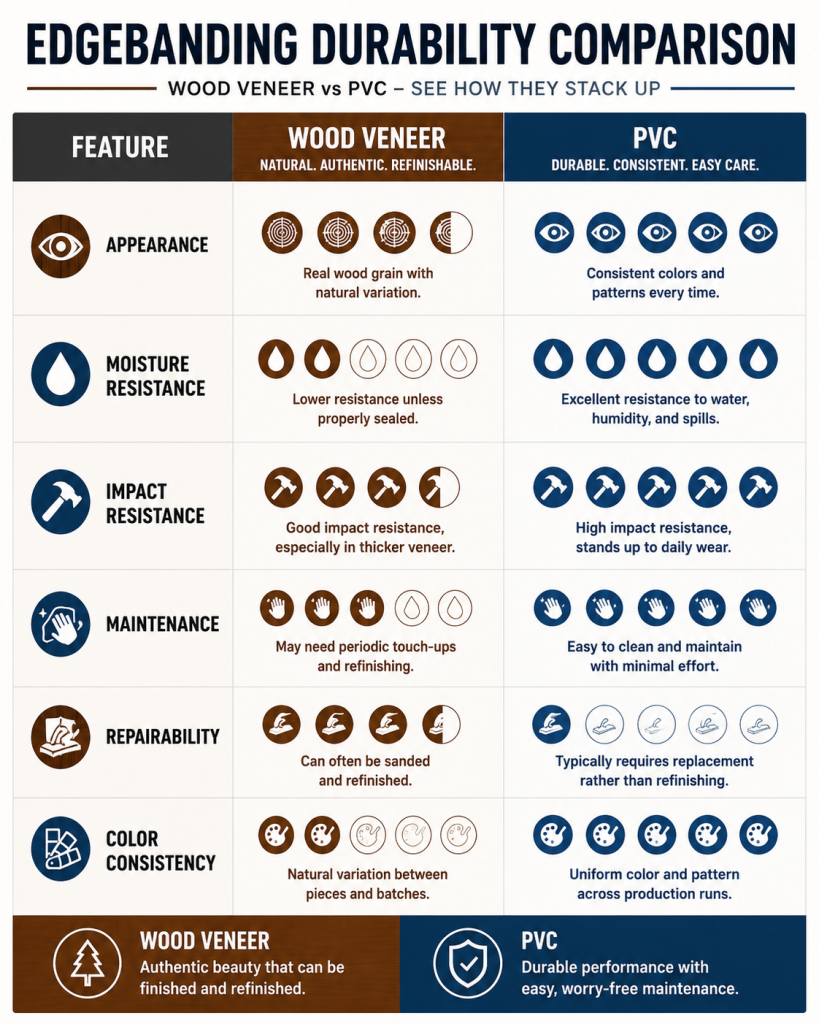
PVC usually offers better resistance to moisture, chemicals, and routine impact. It is often the safer choice for cabinet edges that receive frequent contact or cleaning.
Wood veneer can still provide a durable edge when the shop selects the right thickness, applies it correctly, and seals it with a suitable finish. Thicker veneer may also allow limited sanding and repair that PVC does not.
For either material, a poor glue bond will cause more problems than the material choice itself. Dust, uneven panel edges, incorrect glue temperature, weak pressure, or improper feed settings can lead to lifting and visible glue lines.
Consider Your Shop’s Production Process
Material performance starts with a clean, square panel edge and a compatible adhesive system.
Before selecting an edgeband, review:
- Panel material and thickness
- Required edge width
- Edgeband thickness
- Adhesive type
- Glue application temperature
- Feed speed and pressure
- Trimming and scraping requirements
- Corner-rounding capacity
- Finishing steps
- Expected cabinet environment
Wood veneer may add sanding and finishing steps, but it supports custom stain work. PVC can shorten finishing time, but it requires an accurate color and texture match before production.
For small jobs, repairs, or field work, preglued veneer can offer a simple application method. Production shops will often use non-glued rolls with an automatic edgebander and a compatible hot-melt adhesive.
Final Verdict: Wood Veneer vs PVC Edgebanding
Use wood veneer edgebanding when appearance, natural grain, and stain matching lead the buying decision. It is the better fit for premium wood cabinets, custom millwork, and visible components that should look like solid wood.
Use PVC edgebanding when durability, moisture resistance, color consistency, and production efficiency matter most. It is a practical choice for laminate cabinets, commercial casework, high-use interiors, and projects that need a finished edge without added stain or clear coat.
Many cabinet shops use both. Match veneer to real wood panels and PVC to decorative or solid-color panels. This approach gives each cabinet the right balance of appearance, performance, and production value.
Würth Louis & Company offers PVC, wood veneer, melamine, fusion, and other edgebanding options for professional cabinet and millwork applications. Review the panel match, thickness, adhesive system, and service environment before ordering material for the job.