
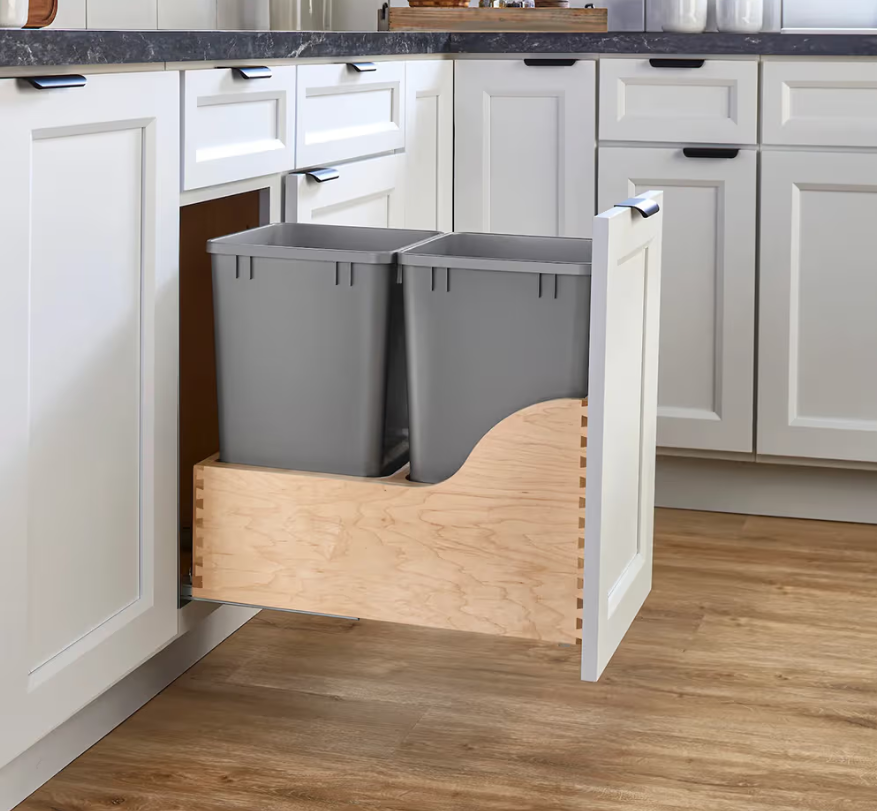
Pull-out trash systems are one of the easiest upsells in cabinet work. Clients love them. Installation is fast. And when done right, they deliver years of smooth, silent operation.
When done wrong (slides out of parallel, frame twisted, door dragging) they’re a callback waiting to happen.
This guide walks through the professional install sequence: Measure first, mount square, test before you attach anything final.
Quick Reference: Pull-Out Trash System Install
| Step | Action | Spec / Watch-Out |
|---|---|---|
| 1. Select System | Match cabinet opening width to SKU | Face-frame cabinets need rear spacers |
| 2. Measure | Width, depth, and height — all three | Leave 1″ above bin rim for bag clearance |
| 3. Mount Slides | Level both sides, mirror front/rear distance | Stay within ±1mm side to side |
| 4. Install Frame | Level on shims, fasten through slotted holes | Check diagonals within 2mm |
| 5. Attach Door | Adjust reveals, then lock screws | Leave all screws loose until reveals align |
| 6. Test | 10 full-extension cycles | Adjust shims if any drag or noise |
Step 1: Select the Right System
Cabinet opening width determines the SKU. Don’t guess, measure the opening first then pull from the table below.
| Cabinet Opening | System | SKU | Price |
|---|---|---|---|
| 12″ | Single 50 QT Bottom-Mount, BLUMOTION Soft-Close | RV4WCSC-1550DM | $370.99 |
| 14.5″ | Double 35 QT Bottom-Mount, Soft-Close, White | RV4VLWCSC-1835DM-2 | $231.99 |
| 15″ | Double 35 QT Under-Mount, Soft-Close, Silver | RV4WCSC-1835DM | $397.99 |
| 15″ | Double 35 QT Aluminum, Full-Extension Soft-Close | 5349 Series | $338.49 |
| 15″ | Double 50 QT Aluminum, Full-Extension Soft-Close | 5349 Series | $367.99 |
| 16″ | Double 35 QT Bottom-Mount with Rev-A-Motion | 4WCSC Series | $356.99 |
| 17.5″ | Double 50 QT Bottom-Mount with Rev-A-Motion | 4WCSC Series | $393.99 |
| 18″ | Double 35 QT Steel Bottom-Mount, Soft-Close | RV53WC-1835SCDM213 | $212.99 |
Face-frame vs. frameless: Face-frame builds require rear brackets or spacers for proper slide alignment. Frameless cabinets mount directly to the interior side walls.
Pro tip: Before ordering, tape the bin footprint to the cabinet floor and close the door. Confirm clearance around hinges, plumbing, and disposal lines — especially in sink base cabinets.
Step 2: Measure the Cabinet
Three numbers drive the entire install. Get all three before touching a screw.
- Width — Inside dimension from frame to frame at the cabinet opening
- Depth — From the inside face of the closed door to the back wall; this must match slide length
- Height — Floor to underside of countertop; leave a minimum of 1″ above the bin rim for bag clearance
If any of these are off, the system won’t operate correctly and you’ll be adjusting after the job is supposedly done.
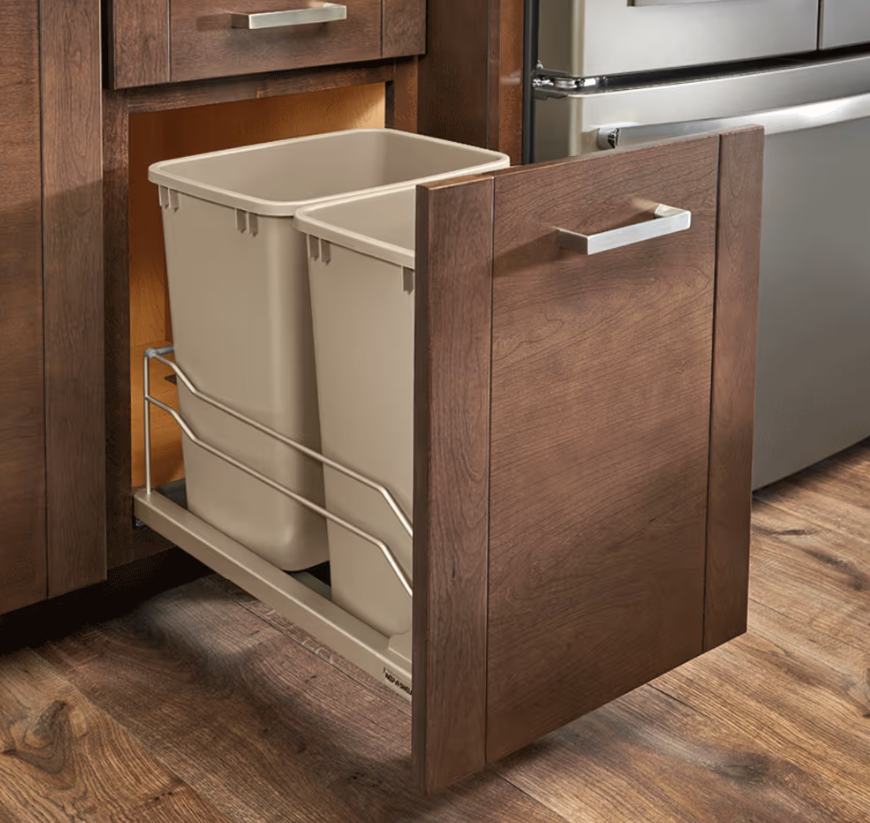
Step 3: Mount the Slides Square
Slides are the foundation of the entire system. Parallel slides = smooth glide. Off-parallel slides = binding, noise, callbacks.
- Strike a level height line on both cabinet sides where slides will mount.
- Clamp a spacer block at the face frame to maintain equal setback on both sides.
- Mount the left slide first. Then mirror on the right, matching front and rear distances within ±1mm.
- Run both slides 10 full cycles. They should move parallel with no lateral wobble or friction.
- Secure rear screws — snug only. Don’t overdrive.
If slides feel uneven after cycling, loosen the rear screws, shim the low side, and retest before locking down.
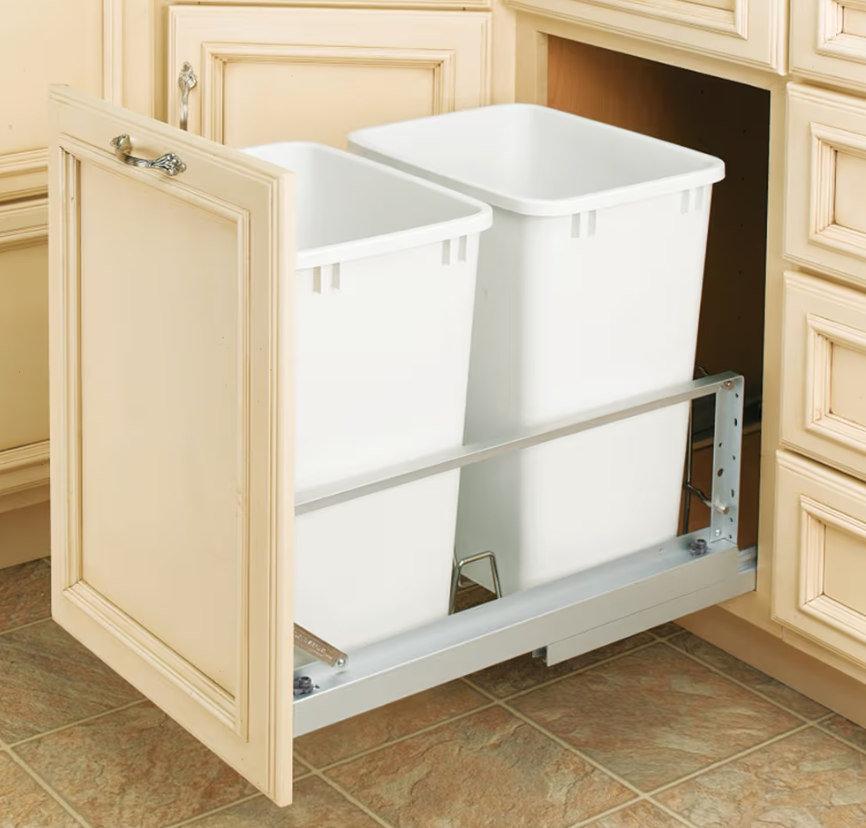
Step 4: Install the Base Frame
Once slides are square, the frame drops into place.
- Set the base frame on shims — level front-to-back and side-to-side.
- Fasten through the slotted mounting holes.
- Check diagonals — both measurements must be within 2mm for true square.
- Dry-fit the carriage and glide in/out three to five times to confirm smooth motion.
A single degree of twist in the frame causes long-term binding and uneven slide wear. The diagonal check takes 30 seconds and eliminates that risk.
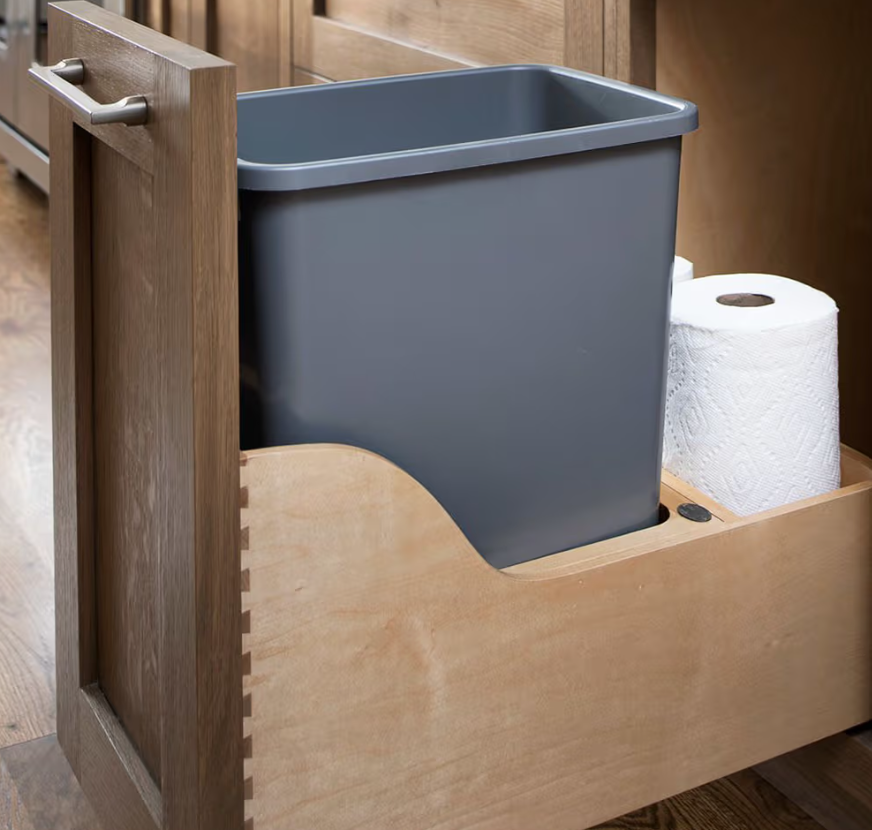
Step 5: Attach the Cabinet Door
Most Rev-A-Shelf systems include adjustable door-mount brackets. This step integrates the face panel onto the pull-out carriage.
- Position the face panel at the desired reveal height.
- Attach the adjustable brackets to the back of the door — leave screws loose.
- Dial in all four reveals using the bracket slot system.
- Tighten screws only when reveals are consistent on all sides.
If the client prefers a separate handle-pull operation — door stays independent, system pulls by hand — skip this step entirely.
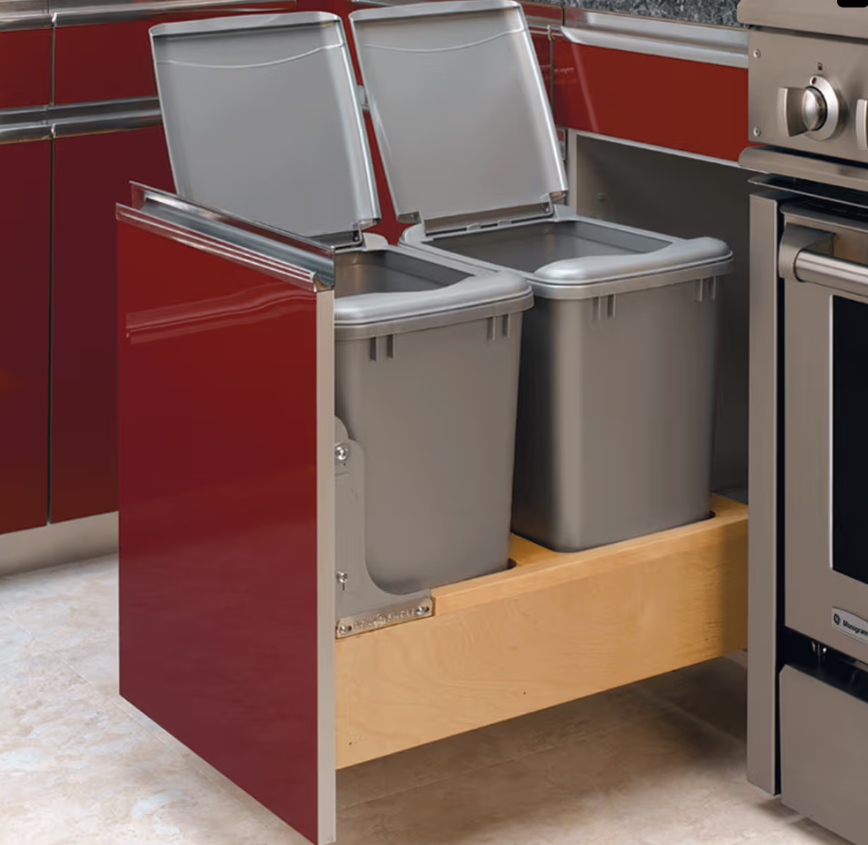
Step 6: Test Before You Leave
Run a full functional check before calling the job done.
- Full-extension test: Open and close 10 complete cycles — smooth with no drag or noise on any cycle.
- Return test: Pull out 3 inches, release. The carriage should return cleanly without racking or hesitation.
- Clearance check: Confirm no interference with hinges, plumbing, or drawer components above.
- Weight test: Apply light downward pressure to the bin track. It should stay level and return without binding.
Any rubbing or resistance: loosen rear screws, adjust shims on the low side, retest. Tighten all fasteners when the system is operating clean.
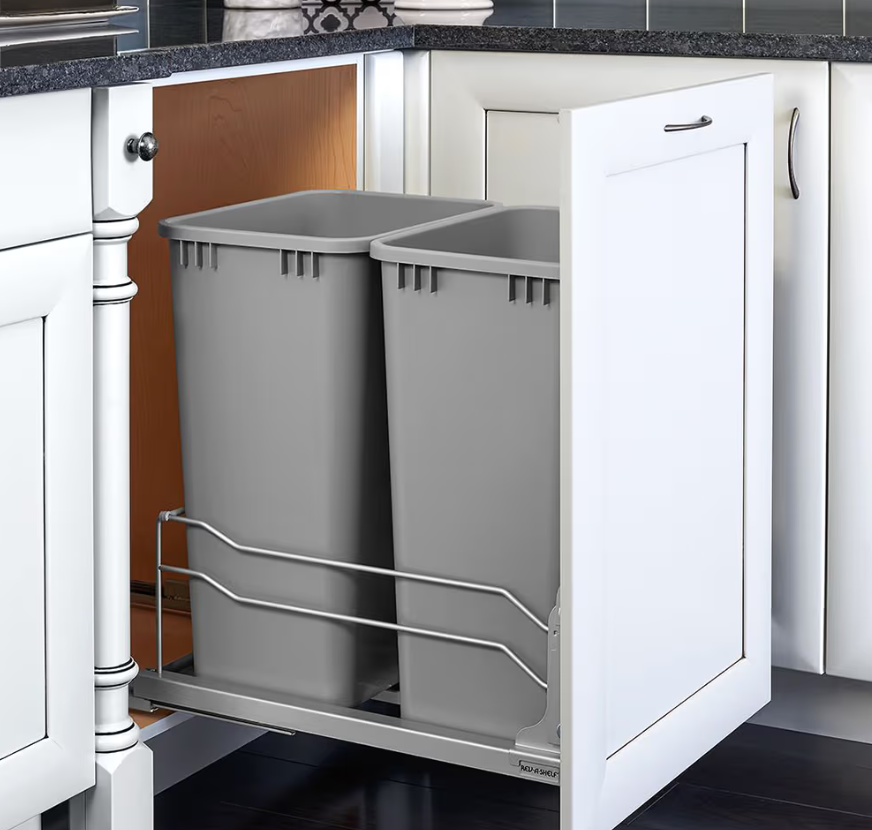
Replacement Parts and Accessories
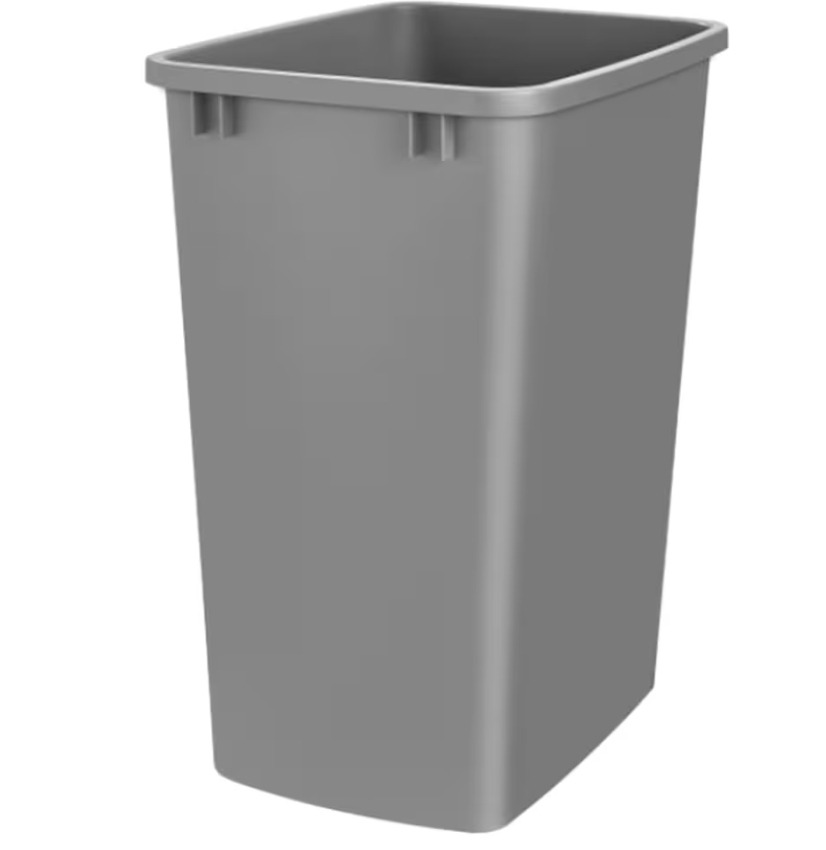
Already have the hardware installed? Replacement bins are available separately.
- 35 QT Replacement Bin, Metallic Silver — SKU RV35-SIL — $23.44/Each
- 35 QT Replacement Bin, White — SKU RV35-8 — $14.23/Each
Stock a few on the shelf. Clients replace bins more often than the frame, having one on hand saves a return visit.
Shop Pull-Out Trash Systems at Würth Louis and Company
Würth Louis and Company carries the full Rev-A-Shelf waste container lineup, bottom-mount, under-mount, steel frame, aluminum, and Rev-A-Motion systems. All available by the unit with account pricing for qualified shops.
Shop Trash, Waste and Recycling Systems →
Questions about fitting a system to a specific cabinet opening? Contact your local Würth Louis and Company sales rep or branch location.