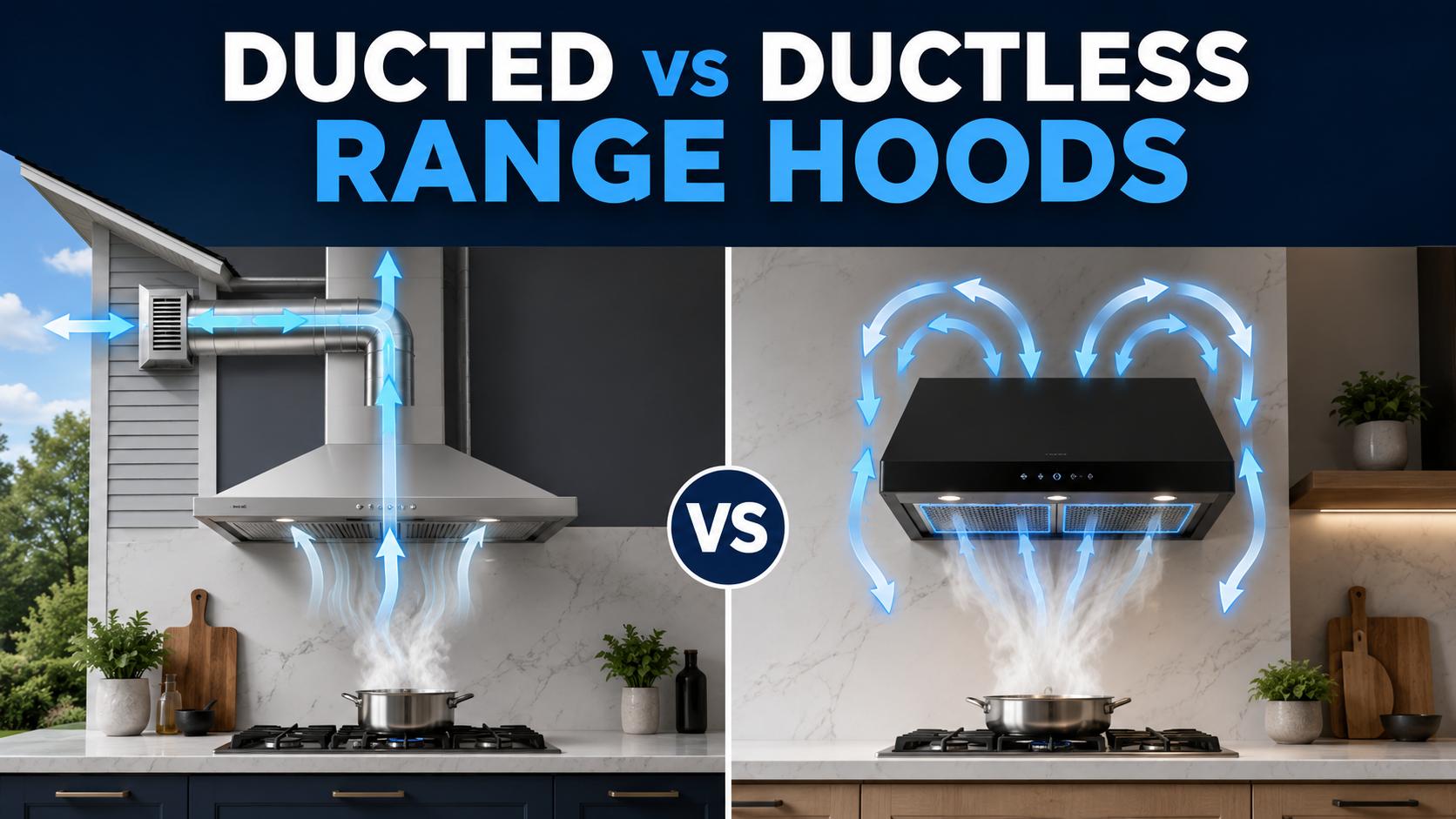
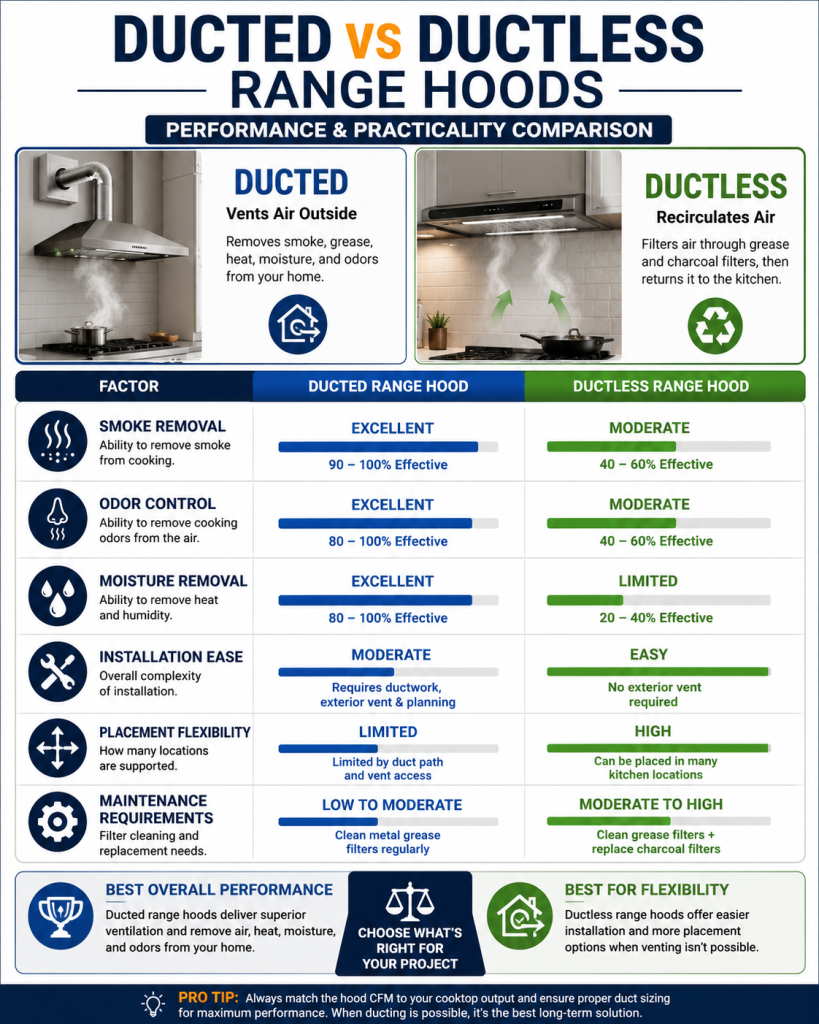
Ducted range hoods vent smoke, grease, heat, moisture, and odors outside. Ductless range hoods filter the air and send it back into the kitchen. For most pro-grade kitchen projects, ducted ventilation is the stronger choice.
Ductless range hoods work best when ductwork is not practical, such as in apartments, condos, remodels, or kitchens without exterior vent access.
Quick Skim: Ducted vs Ductless Range Hoods
| Factor | Ducted Range Hood | Ductless Range Hood |
|---|---|---|
| Best for | Frequent cooking, gas ranges, high-heat cooking, larger kitchens where exterior venting is possible | Apartments, condos, remodels, tight layouts, and kitchens where exterior venting is limited |
| How it works | Pulls air through the hood and vents it outside | Pulls air through grease and charcoal filters, then recirculates it |
| Smoke removal | Strong | Moderate |
| Odor removal | Strong | Moderate, depends on filter condition |
| Heat and moisture control | Better, because air leaves the home | Limited, because air returns to the room |
| Installation | Requires ductwork through a wall, ceiling, roof, or floor | Easier because no exterior duct is required |
| Placement flexibility | Limited by duct path | High |
| Maintenance | Clean metal grease filters | Clean grease filters and replace charcoal filters |
| Best buying choice | Choose when performance matters most | Choose when ducting is not possible or cost-effective |
What Is a Ducted Range Hood?
A ducted range hood connects to ductwork and vents cooking air outside the home. When properly sized and installed, it uses a fan to help capture smoke, steam, odors, heat, and grease particles from the cooking area, then pushes that air through ductwork to an exterior vent.
This makes ducted hoods a strong fit for kitchens with gas ranges, high-output cooktops, frequent frying, searing, sautéing, or heavy daily use.
For contractors, remodelers, and cabinet shops, ducted ventilation should be the first option when the project allows it. It offers better long-term performance and creates a cleaner cooking space for the homeowner.
What Is a Ductless Range Hood?
A ductless range hood does not vent air outside. Instead, it pulls cooking air through a grease filter and a charcoal or carbon filter. The hood then sends the filtered air back into the kitchen.
Ductless hoods are also called recirculating range hoods. They are useful when the kitchen layout will not support ductwork or when the project budget does not allow major venting changes.
They offer more placement flexibility, but they do not vent heat, humidity, or combustion byproducts outdoors. Their smoke and odor control also depends on filter condition.
The Main Difference: Venting vs Recirculating
The key difference is simple.
A ducted hood removes air from the kitchen. A ductless hood filters air and returns it to the kitchen.
That one difference affects performance, installation, cost, layout, and maintenance.
Ducted hoods are usually better for ventilation performance. Ductless hoods are usually better for installation flexibility.
When to Choose a Ducted Range Hood
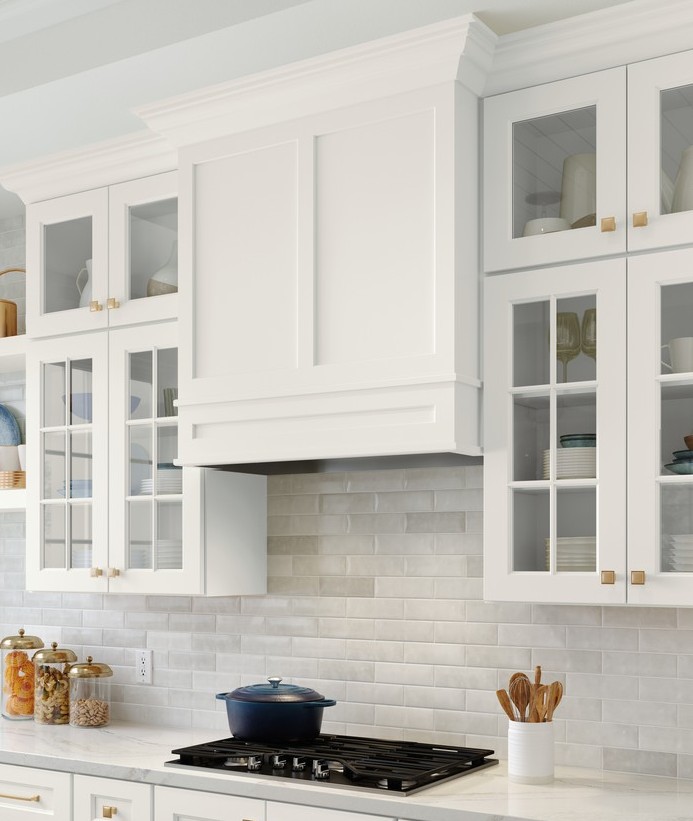
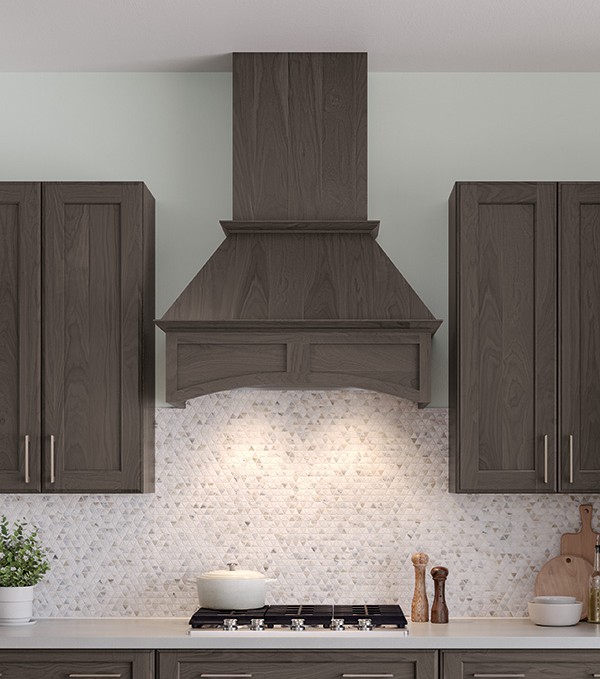
Choose a properly sized ducted range hood when the kitchen can support exterior venting and the homeowner wants stronger ventilation performance.
Best uses for ducted hoods
A ducted hood works well for:
- Frequent cooking
- Gas ranges and high-BTU cooktops, especially where exterior venting is required or preferred
- Frying, searing, grilling, and wok cooking
- Large kitchens
- Humid climates
- Homes where odor control is a high priority
- New builds and major remodels
A ducted hood also helps reduce heat and moisture because it moves cooking air out of the home instead of sending it back into the room. Ducted range hoods are a good fit for humid climates because they vent outside.
Trade-focused buying factors
For professional projects, check the duct route early. Confirm the wall, ceiling, roof, or floor path before final cabinet layout. Also check hood width, CFM, mounting height, duct size, duct length, transition pieces, make-up air needs, and local code.
A strong hood still needs the right duct path. Long duct runs, sharp turns, or undersized ductwork can reduce performance and increase noise.
When to Choose a Ductless Range Hood
Choose a ductless range hood when exterior venting is not possible, allowed, or practical for the project scope.
Best uses for ductless hoods
A ductless hood works well for:
- Apartments and condos
- Older homes with limited vent access
- Kitchens without an exterior wall nearby
- Remodels where adding ductwork would expand the project scope
- Light cooking
- Rental units
- Layout-driven projects where the cooktop location cannot change
Ductless hoods can be placed in various locations because they filter air instead of directing it outside. It also notes that they may not remove smoke and fumes as well as ducted hoods.
Trade-focused buying factors
Ductless hoods need filter access. Make sure the homeowner can remove, clean, and replace filters without trouble.
Also confirm replacement charcoal filter availability. A ductless hood depends on those filters for odor control. Without regular replacement, performance drops.
Installation Differences
Ducted hoods need more planning. They require ductwork, an exterior vent, and a layout that supports airflow. That can add labor, materials, and coordination with cabinets, framing, electrical, roofing, or exterior wall work.
Ductless hoods are often simpler to install because they do not need an exterior vent. This can reduce project scope when exterior ductwork would require major wall, ceiling, roof, or cabinet changes.
For cabinet and remodel projects, the best time to decide is before cabinet ordering. Hood type affects cabinet dimensions, filler needs, soffit planning, wall clearances, and appliance placement.
Maintenance Differences
Ducted hoods usually use washable metal grease filters. These filters still need routine cleaning, especially in kitchens with frequent frying or heavy cooking.
Ductless hoods use grease filters plus charcoal or carbon filters. The grease filter may be washable, but the charcoal filter usually needs replacement. Ductless hoods require regular grease filter cleaning and periodic charcoal or carbon filter replacement. The schedule depends on the hood model, filter type, and cooking frequency, so check the manufacturer’s instructions.
For homeowners who want less filter-related upkeep, ducted is often the better choice because it does not rely on charcoal filters for odor control.
What About CFM?
CFM means cubic feet per minute. It measures how much air the hood can move. Higher CFM generally means stronger venting power, but the right CFM depends on kitchen size and cooking style.
Do not choose a hood by CFM alone. Also look at:
- Hood width
- Capture area
- Mounting height
- Cooktop BTU output
- Duct size
- Duct length
- Number of bends
- Noise rating
- Filter type
- Make-up air needs
- Local code requirements
For gas cooktops, compare the hood specs with the appliance’s BTU output. Higher CFM generally means more airflow, but the right CFM depends on the cooking appliance, hood width, mounting height, duct design, kitchen layout, and local code.
Can You Convert a Ducted Hood to Ductless?
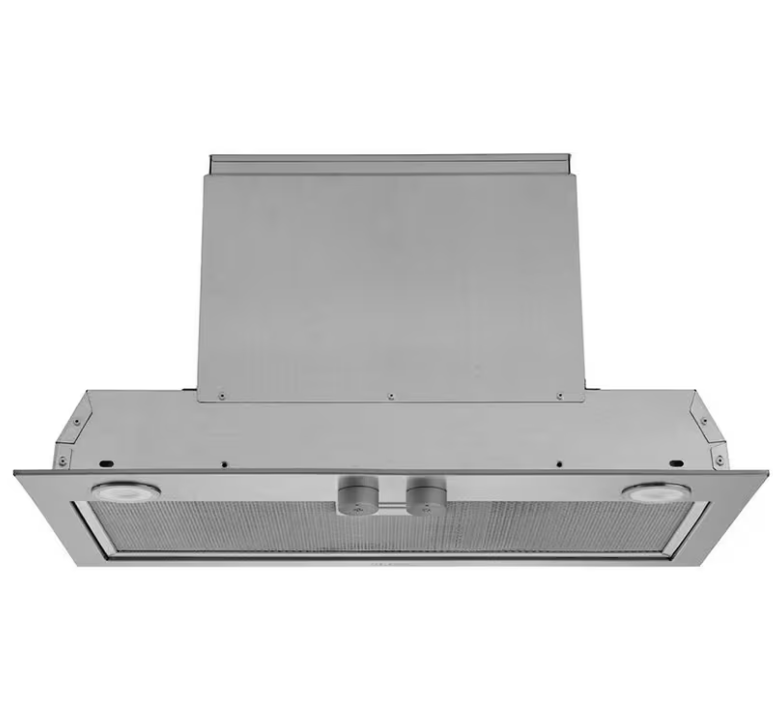
Some range hoods can convert from ducted to ductless with a recirculating kit. These kits often include charcoal filters and parts that allow the hood to recirculate air back into the kitchen.
Do not assume every hood is convertible. Check the product specs before purchase. For remodelers and cabinet shops, this matters because the wrong hood can delay installation or force changes to the cabinet plan.
Which Range Hood Is Better?
A properly sized and installed ducted range hood is generally better for ventilation performance. It helps remove more smoke, heat, humidity, grease particles, and odors from the kitchen by venting cooking air outdoors.
A ductless range hood is better for layout flexibility. It can help manage grease and some odors when ductwork is not possible, allowed, or practical, but it recirculates air back into the kitchen.
For most professional kitchen upgrades, ducted is the preferred choice when the structure allows it. Ductless is the practical fallback when the project has venting limits. This is important for technical accuracy and homeowner expectations.
Final Takeaway: Ducted vs Ductless Range Hoods
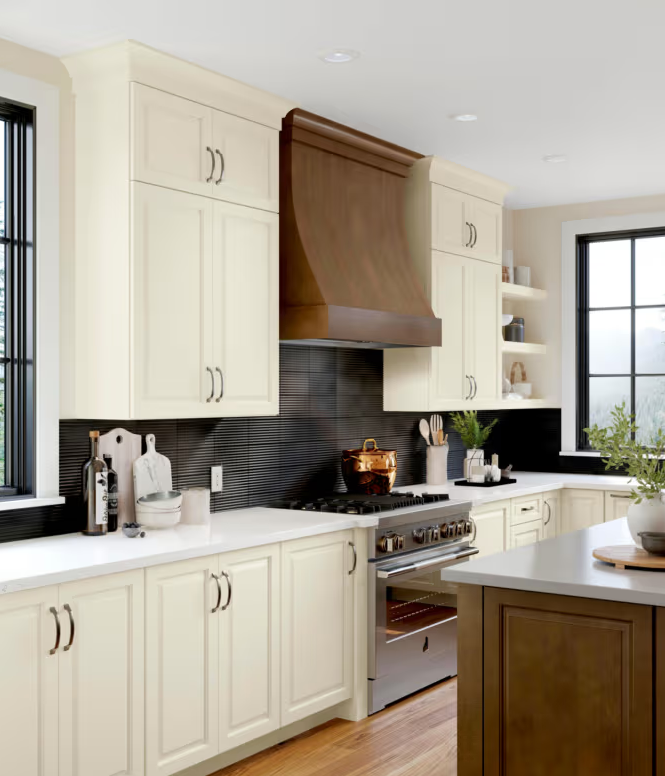
Choose a ducted range hood when exterior venting is practical and performance, odor control, heat removal, and moisture control matter most. Choose a ductless range hood when ductwork is not possible, allowed, or practical for the project scope.
For contractors, cabinet shops, and remodelers, make the range hood decision early. The right choice affects cabinet layout, duct routing, appliance specs, maintenance needs, and the finished kitchen experience.