


The woodworking industry entered a real transition at the start of this year. Manufacturers are no longer allowed to produce methylene chloride-based contact adhesives. Once existing inventory is sold through, it cannot be replaced. For cabinet shops, millwork operations, and furniture manufacturers, this change affects daily production, bonding reliability, dry times, and safety practices.
This is not a temporary shortage. It is a permanent industry shift that requires education, planning, and new product adoption. Shops that act early will protect uptime, maintain bond quality, and avoid costly trial and error. Shops that wait risk delays and inconsistent results.
Würth Louis and Company anticipated this shift and expanded its adhesive program with proven non-methylene chloride alternatives through the Würth Choice program. These products are already in stock, tested in the field, and approved by Würth sales teams across multiple regions.
Quick Summary Table: Alternatives for Methylene Chloride Ban
| Topic | What to Know | Why It Matters |
|---|---|---|
| Why methylene chloride is banned | Manufacturers can no longer produce it as of January | Old glue cannot be reordered once inventory is gone |
| Main replacement categories | Canisters, flammable aerosols, water based | Each affects dry time, safety, and workflow |
| Best direct replacement | PermaGrip 107XM | Same bond strength and coverage as WRG200 |
| Dry time expectations | Slightly slower than legacy glue | Requires correct spray technique |
| Shop impact | Minor process change, no performance loss | Keeps production moving without rework |
The Methylene Chloride Ban Is Here
The ban on methylene chloride adhesives is no longer a future concern. It is already affecting supply chains and shop operations across the woodworking industry. Once old inventory is gone, it is gone for good.
For professional cabinet, millwork, and furniture shops, the priority is clear. Maintain bond strength, protect cycle times, and keep crews productive.
The solution is not guessing. It is choosing proven alternatives that match existing workflows.
Why Canister Adhesives Lead the Transition
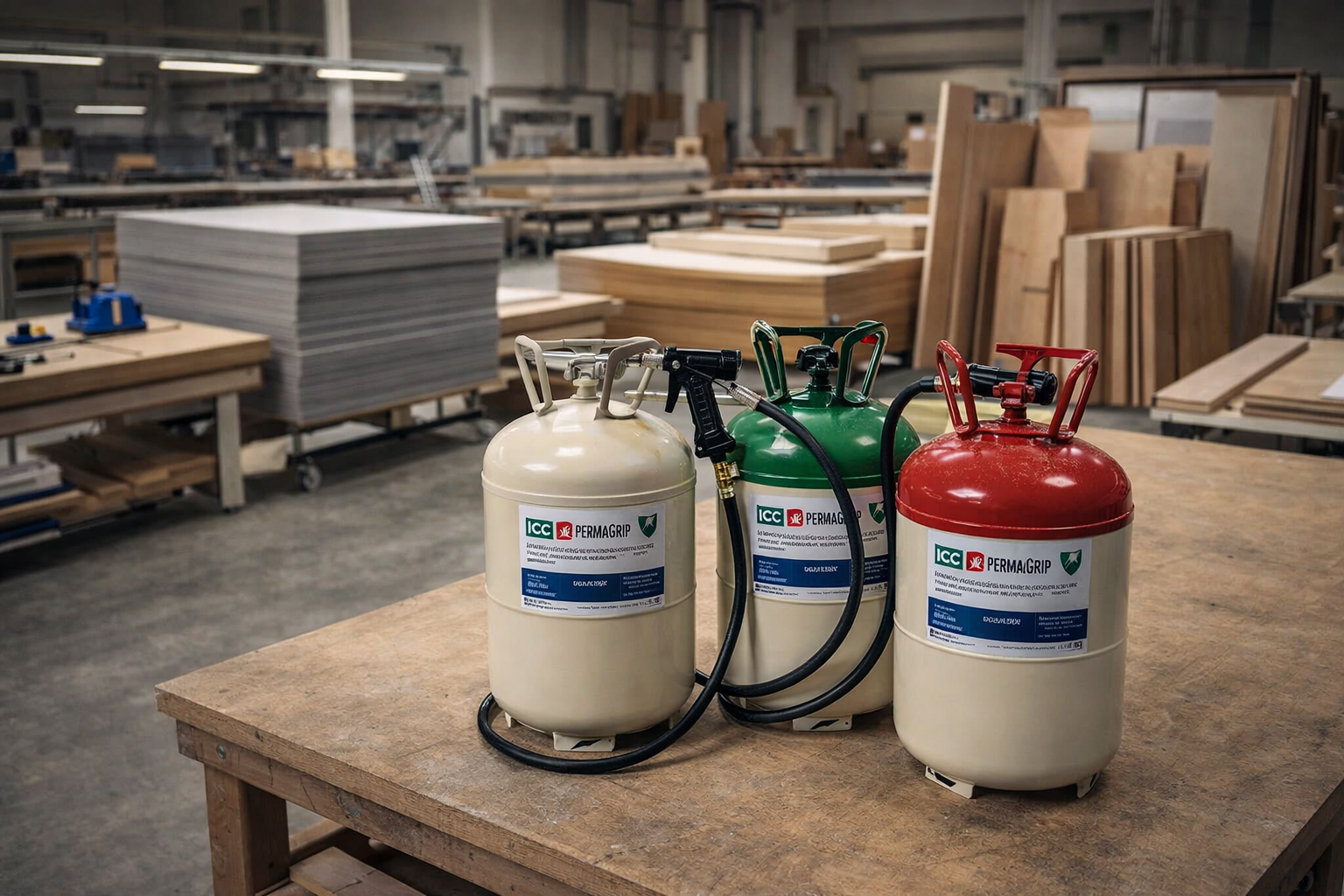
Among all replacement options, non-methylene chloride canister adhesives deliver the best balance of safety, speed, and performance. They preserve familiar spray techniques and minimize retraining for employees.
Water-based systems have their place but extended dry times change production flow. Flammable aerosols introduce risks most professional shops avoid.
Canisters remain the most efficient path forward.
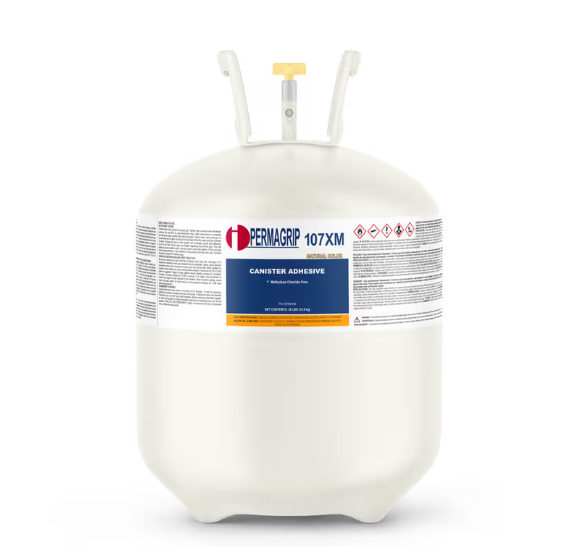
PermaGrip 107XM Delivers Familiar Results
PermaGrip 107XM was developed specifically to replace WRG200. The adhesive chemistry remains the same. Only the propellant changed to meet new regulations.
Shops get the same coverage, the same bond strength, and nearly identical dry times when applied correctly. Sales demos across multiple regions confirmed strong, reliable bonds in real shop conditions.
Available in multiple sizes and colors, PermaGrip 107XM is already in stock and ready to ship through Würth Louis and Company.
Application Technique Is the Key Difference
The transition does require one adjustment. Do not spray heavy.
Normal, even coverage on both substrates delivers the best results. Over application slows flash time without improving bond quality. This is more noticeable with non-methylene chloride systems but easy to control with proper technique.
Final Takeaway: Alternatives to Methylene Chloride Ban
This industry change affects everyone. Shops that move early avoid shortages, protect quality, and maintain customer confidence.
Würth Louis and Company is positioned to help shops transition with in-stock adhesives, technical guidance, and proven alternatives that work.