Most cabinet door problems are not installation mistakes. They are cabinet hinge degree mistakes.
Doors hit walls. Pull outs get blocked. Corner cabinets feel cramped. In nearly every case, the wrong hinge opening angle was specified.
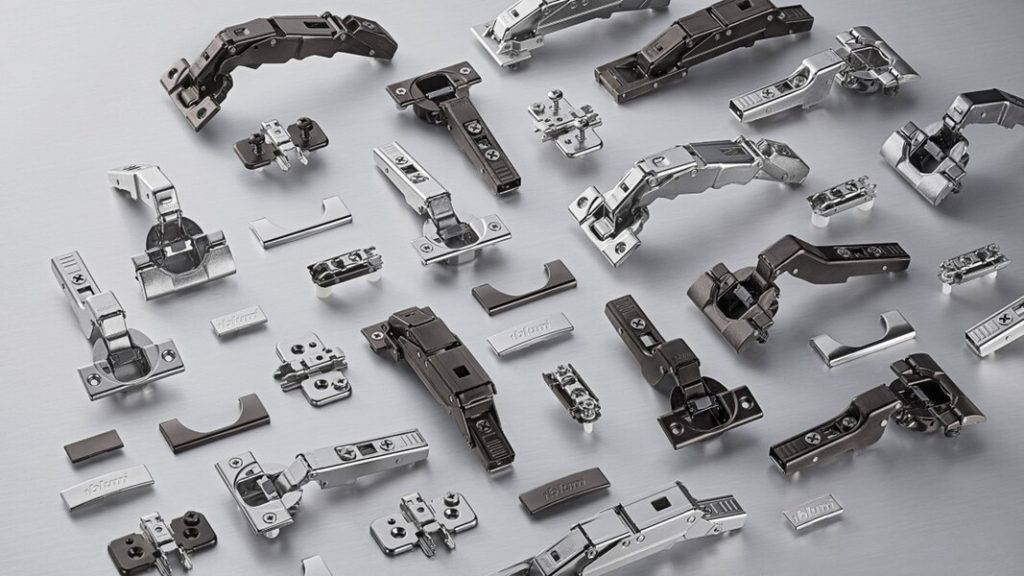
Cabinet hinge degrees range from 40° to 180°+. The most common hinge is 110°, but many layouts require something wider or more restricted.
If you are specifying hardware for a kitchen, bath, or custom cabinet build, the hinge degree must match the cabinet layout.
Below is a quick reference chart, followed by real world guidance.
Quick Skim: Cabinet Hinge Degree Chart
| Degree | Name | Best For | Avoid If | Pro Tip |
|---|---|---|---|---|
| 45° | Bi Fold | Folding corner doors | Standard single doors | Used in paired door systems |
| 90° | Restricted | Cabinets tight to walls | Roll outs or pull outs | Prevents drywall damage |
| 95° | Slight Restricted | Wall adjacency | Interior drawers | Cleaner stop than 110° |
| 110° | Standard | Most kitchens and baths | Tight side clearance | Default spec hinge |
| 120° | Wide Standard | Easier access layouts | Wall on hinge side | Great for frameless cabinets |
| 165° | Wide Angle | Blind corners, pull outs | Tight installations | Ideal for roll out trays |
| 170° | Full Access | Pantry and storage cabinets | No clearance room | Maximizes interior visibility |
| 180°+ | Flat Opening | Appliance garages | Cabinets near walls | Specialty hinge application |
What Is a Cabinet Hinge Degree?
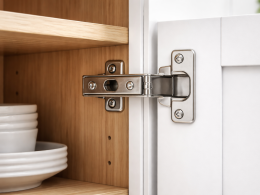
A cabinet hinge degree refers to how far the door swings open from the closed position.
It does not determine overlay type. It determines access and clearance.
Overlay style controls how the door sits on the cabinet. Hinge degree controls how far it opens.
They are independent decisions.
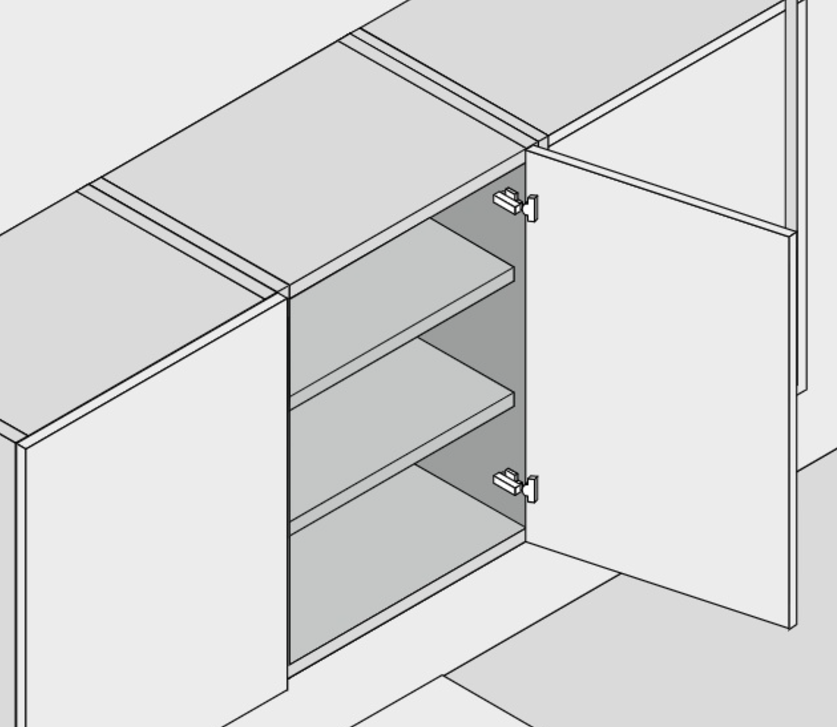
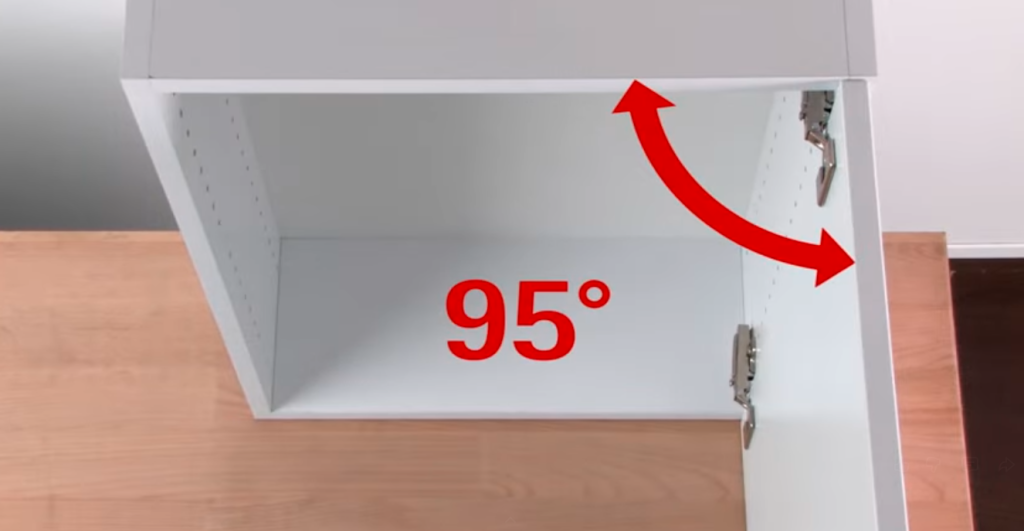
90° to 95° Cabinet Hinges
Best for Tight Spaces
Use 90° to 95° hinges when a cabinet is installed next to:
- A wall
- A tall pantry
- A refrigerator panel
- A decorative end panel
A restricted opening angle prevents the door from striking surrounding surfaces.
Real World Example
Base cabinet installed directly against drywall with no filler strip.
A 110° hinge may allow the handle to impact the wall. A 95° hinge prevents damage and reduces callbacks.
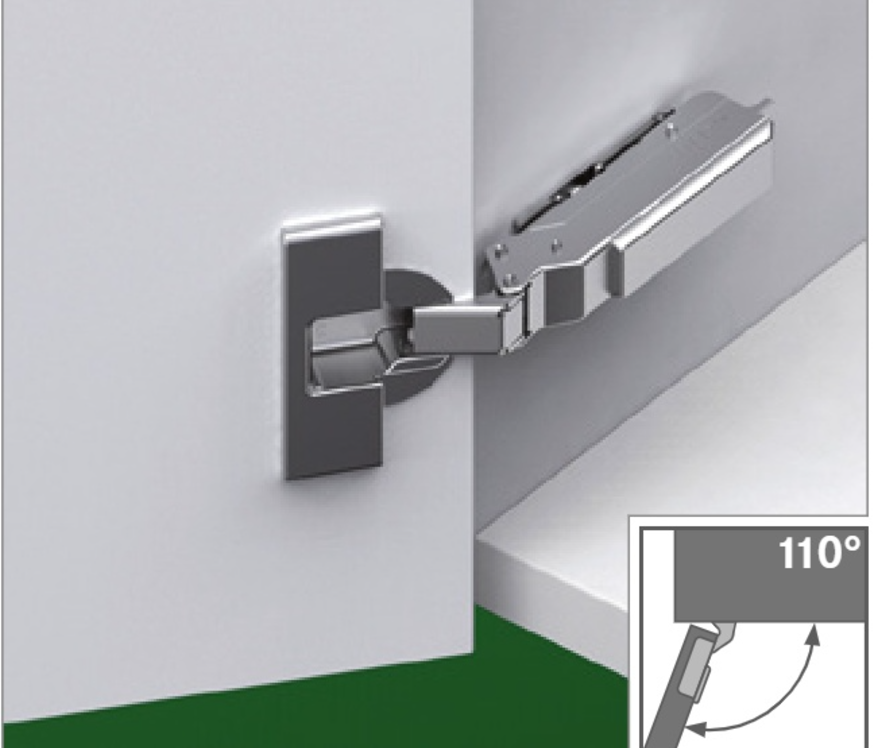
110° Cabinet Hinges
The Industry Standard
The 110° hinge is the most common cabinet hinge opening angle in residential cabinetry.
It provides:
- Comfortable access
- Reliable soft close integration
- Compatibility with full overlay, half overlay, and inset doors
If you are building a standard kitchen without tight constraints, this is your default hinge.
Most soft close concealed hinges fall in this category.
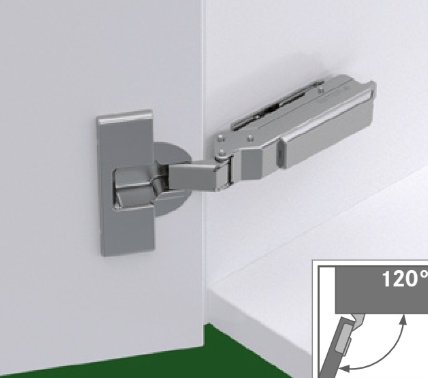
120° Cabinet Hinges
A Slight Upgrade in Access
A 120° hinge provides more access than a 110° without moving into wide angle territory.
It works well in:
- Frameless cabinetry
- European style kitchens
- Layouts without adjacent obstructions
If you want improved access but do not need 165°, this is a smart middle ground.
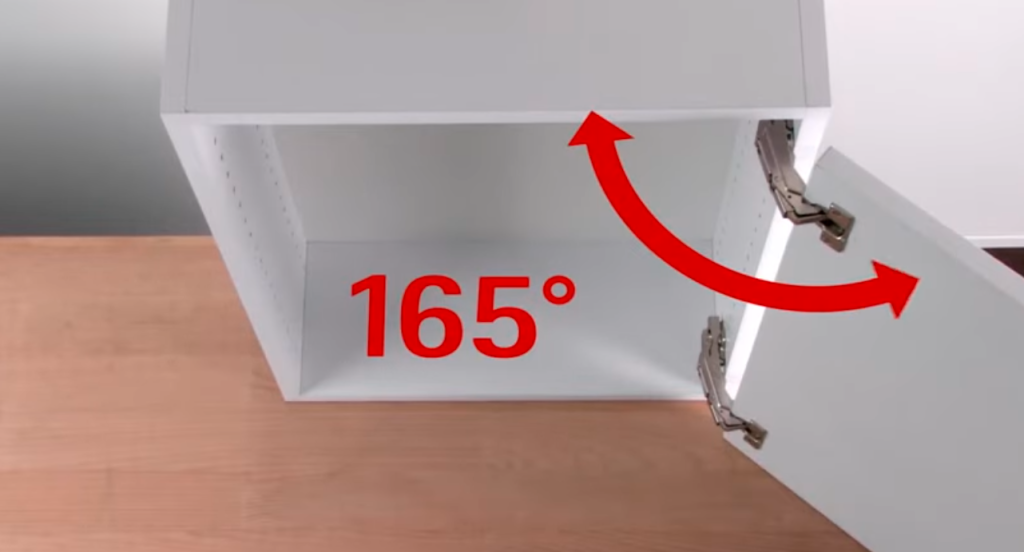
165° to 170° Wide Angle Hinges
For Full Cabinet Access
Wide angle hinges allow the door to swing almost completely out of the opening.
These are essential for:
- Blind corner cabinets
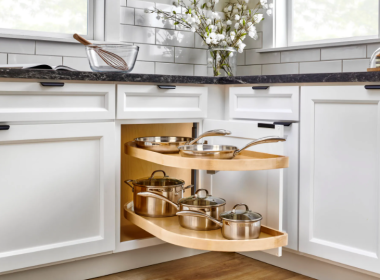
- Lazy susans
- Pull out shelves
- Interior roll out trays
- Deep pantry cabinets
Without a wide angle hinge, interior storage components can catch on the door edge.
Important: Wide Angle vs Zero Protrusion
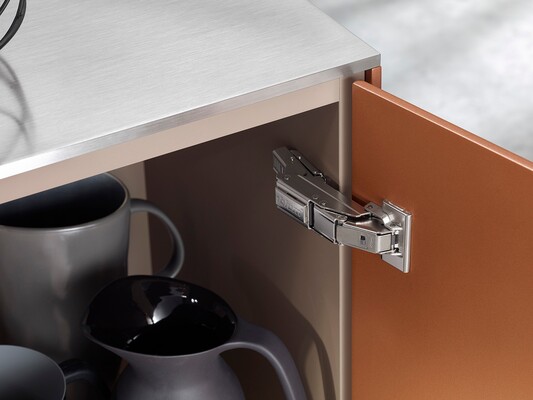
A hinge may open to 165°, but still block interior pull outs if the hinge arm protrudes into the opening.
Zero protrusion hinges are designed so the door clears the cabinet opening completely.
If your cabinet includes:
- Sliding shelves
- Interior drawers
- Roll out trays
Choose wide angle with zero protrusion.
40° to 50° Hinges
For Bi Fold and Folding Door Systems
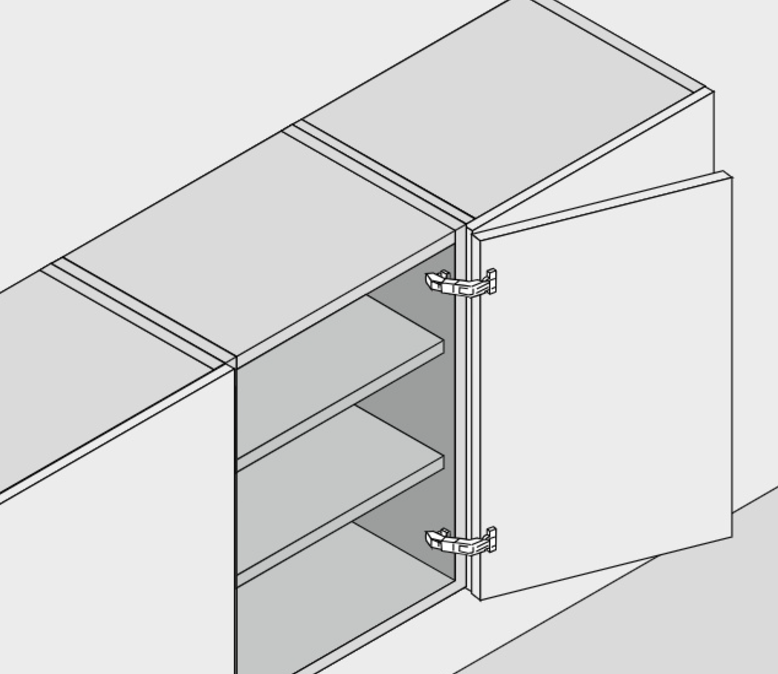
These hinges are used in paired door systems where two panels fold together.
Common in:
- Pie cut lazy susans
- Diagonal corner cabinets
- Specialty corner solutions
These are application specific hinges and must match the door configuration.
180°+ Hinges
Flat Opening Applications
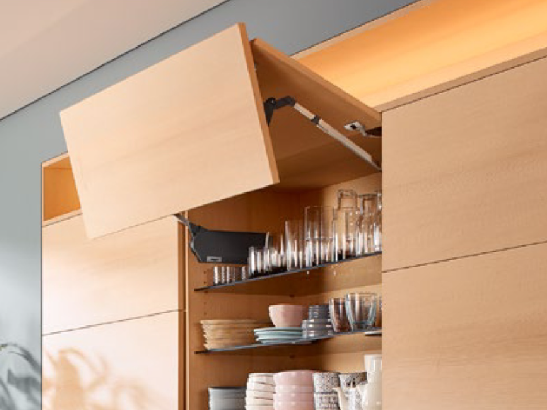
A 180° hinge allows the door to open flat against the cabinet side.
Used for:
- Appliance garages
- Tall pantry cabinets
- Specialty storage
This is not common in standard kitchens, but critical in certain custom layouts.
Restriction Clips: On Site Flexibility
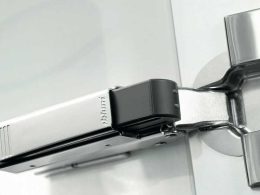
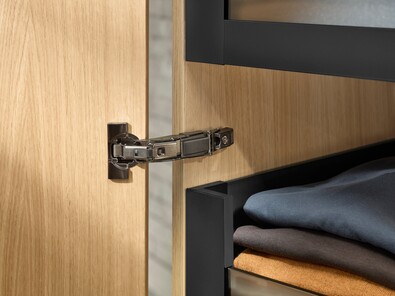
Many European concealed hinges allow angle reduction using restriction clips.
Example:
- Install a 110° hinge.
- Add a clip to reduce it to 90° if field conditions require it.
This gives installers flexibility without changing hardware.
How to Choose the Right Cabinet Hinge Degree
Ask these three questions:
1. Is the cabinet next to a wall or obstruction?
If yes, consider 90° or 95°.
2. Is this a standard base or wall cabinet?
Choose 110° or 120°.
3. Does the cabinet include pull outs or corner storage?
Upgrade to 165° or 170° wide angle with zero protrusion.
If maximum interior visibility is required, consider 180°+.
Frequently Asked Questions
What is the most common cabinet hinge degree?
110° is standard for most residential kitchen and bathroom cabinets.
Are hinge degrees different for inset vs overlay cabinets?
No. Overlay determines door position. Hinge degree determines how far the door opens.
Can you reduce a 110° hinge to 90°?
Yes. Many concealed hinges accept restriction clips.
What hinge degree is best for pull out shelves?
165° or higher, preferably zero protrusion.
Final Takeaway: Cabinet Hinge Degrees
Hinge degree is not a minor detail. It directly affects usability, clearance, and long term durability.
Specifying the correct opening angle:
- Prevents wall damage
- Eliminates pull out interference
- Improves cabinet access
- Reduces service calls
Before ordering hinges for your next project, match the hinge degree to the cabinet layout.
Explore standard, wide angle, and zero protrusion concealed hinges at Wurth Louis & Company and choose the opening angle that fits your build.